• Skip to primary navigation
  • Skip to main content
  • Skip to primary sidebar
Japan Distilled logo in black.

Japan Distilled

Home of the Japan Distilled Podcast

  • Home
  • Podcast Episodes
  • About Us
  • Contact Us
  • Show Search
Hide Search

Podcast

Eau de Vie: Lovely Japanese Water of Life (Ep. 30)

February 22, 2022 · 2 Comments

EPISODE INTRO

In the 30th episode of the Japan Distilled podcast, your hosts Christopher Pellegrini and Stephen Lyman swim into uncharted waters. That is the water of life, eau de vie. An uncommon spirits style that’s only very recently begun capturing the attention of Japan’s spirits community.

CREDITS

Theme Song: Begin Anywhere by Tomoko Miyata (http://tomokomiyata.net/)

Mixing and Editing: Rich Pav (https://www.uncannyjapan.com/)

HOSTS

CHRISTOPHER PELLEGRINI Vermont born and bred, long-time Tokyo resident and author of The Shochu Handbook, Christopher learned about delicious fermentations as a beer brewer at Otter Creek (Middlebury, VT). He now spends most of his waking hours convincing strangers that shochu and awamori are unlike anything they’ve ever tried before. 

STEPHEN LYMAN discovered Japan’s indigenous spirits at an izakaya in New York City. He was so enthralled that he now lives in Japan and works in a tiny craft shochu distillery every autumn. His first book, The Complete Guide to Japanese Drinks, was nominated for a 2020 James Beard Award.

Stephen and Christopher have an almost insatiable thirst for well made spirits.

If you have any comments or questions about malt vs. koji, please reach out to Stephen or Christopher via Twitter. We would love to hear from you. 

SHOW NOTES

What is Eau De Vie?

At its most basic, eau de vie is French for “water of life”, but most often refers to unaged (or very lightly barrel aged) fruit based distillates. In Western Europe there is a long history of home distillation of eau de vie (known as schnapps in Germany). When made from fruits with high sugar content, the fruits or their juices are fermented while for fruits with lower sugar content they are usually macerated in neutral spirit before redistilling to capture the aromas of those fruits. They are very much designed to be reflective of what they are made from.

eau de vie
spirit spills from the still. photo courtesy of mitasayo botanical distillery.

With regard to Japanese eau de vie, it is no surprise that a country so adept at making gorgeous aromatic shochu, would also be able to produce some wonderful eau de vie.

Nikka Apple Brandy

As we mentioned on the last episode, Nikka’s first alcohol product was an apple brandy after they fermented and distilled unsold apple juice. This was likely unaged or only lightly aged so it could have been considered an eau de vie. We are unsure if this was the first fruit distillate in Japan, but it was certainly one of the earliest.

Sata Souji

Modern eau de vie in Japan has departed from the western European traditions in that two of the three eau de vie makers use honkaku shochu as the base spirit before macerating fruits, botanicals, herbs, spices, or even vegetables before redistilling to capture the aromas.

The array of still designs in use at Sata Souji to make beautiful aromatic spirits.

At the forefront of this is Kagoshima based Sata Souji, which has turned their know how with making high quality sweet potato shochu and turned it toward some stellar Japanese eau de vie and gin expressions. They’ve gone all in, importing vintage European copper pot stills to do the work of capturing the gorgeous aromas of everything from Japanese plums to cumin to sansho peppercorns.

Mitosaya Botanical Distillery

The Mitosaya Botanical Distillery, which opened just a few years ago in a former municipal botanical garden in Chiba Prefecture, has focused on making true fruit-based eau de vie in the European style with single orchard expressions of all sorts of Japanese fruits from around the country. Really stellar output that is sold out nearly as soon as its put on their website.

persimmons being processed for distillate. photo courtesy of mitasoya botanical distillery.

Tatsumi Distillery

Up in the mountains of Gifu Prefecture, you’ll find the microdistillery Tatsumi. This one man show run by Shohei Tatsumi, who began production in 2017 after learning how to make shochu in Kyushu. He makes everything in his tiny production runs in a very traditional wooden still.

With Tatsumi, you never know what will happen next.

With runs of less than 500 bottles per product, he stuff is almost impossible to find, but if you do happen across it, try it. Fascinating stuff.

KANPAI!

The Master of Japanese Whisky: Masataka Taketsuru (Ep. 29)

February 7, 2022 · Leave a Comment

EPISODE INTRO

In the 29th episode of the Japan Distilled podcast, your hosts Christopher Pellegrini and Stephen Lyman take a look back at the most important man in the history of Japanese whisky. Masataka Taketsuru not only build the Yamazaki Distillery for Suntory, but then set out on his own and founded Nikka. The ripples of his contribution are still being felt today.

CREDITS

Theme Song: Begin Anywhere by Tomoko Miyata (http://tomokomiyata.net/)

Mixing and Editing: Rich Pav (https://www.uncannyjapan.com/)

HOSTS

CHRISTOPHER PELLEGRINI Vermont born and bred, long-time Tokyo resident and author of The Shochu Handbook, Christopher learned about delicious fermentations as a beer brewer at Otter Creek (Middlebury, VT). He now spends most of his waking hours convincing strangers that shochu and awamori are unlike anything they’ve ever tried before. 

STEPHEN LYMAN discovered Japan’s indigenous spirits at an izakaya in New York City. He was so enthralled that he now lives in Japan and works in a tiny craft shochu distillery every autumn. His first book, The Complete Guide to Japanese Drinks, was nominated for a 2020 James Beard Award.

Stephen and Christopher have a deep and abiding respect for the craftsmen of Japan and Masataka Taketsuru was in the embodiment of this in early whisky production.

If you have any comments or questions about malt vs. koji, please reach out to Stephen or Christopher via Twitter. We would love to hear from you. 

SHOW NOTES

Early Years

Born June 20, 1894 to the family that owned the Taketsuru Sake Brewery, which is still in operation today. The brewery started as a salt manufacturer in 1651 before beginning sake production in 1733.

Taketsuru Berwery (photo courtesy of the Takehara Tourism Bureau)

Taketsuru studied sake brewing at Osaka Technical High School (today known as Osaka University). He never graduated, instead being recruited by Settsu Distillery, the largest maker of industrial alcohol and imitation spirits in Japan at the time.

Scotland

Within fewer than 18 months of starting at Settsu, Taketsuru would be sent on an audacious journey to steal the best kept secrets of Scotch malt whisky so Japan could begin their own authentic whisky making.

He studied chemistry and English at Glasgow University before embarking on a series of distillery internships. First at Longmorn Distillery in Speywide, the Bo’ness grain distillery, and finally at Hazelburn in Campbeltown. He wrote down everything he learned and his notes become the Japanese whisky bible, which is still used today.

Masataka Taketsuru at Longmorn Distillery, 1919 (photo courtesy of Nikka Whisky)

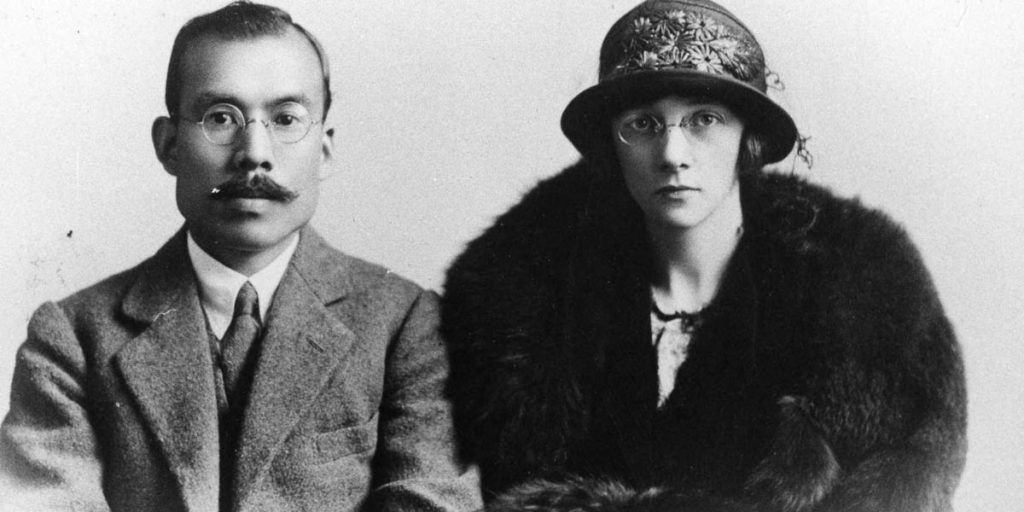
While in Scotland he met his wife, Rita Cowan. The couple married in January 1920 and then spent the first 5 months of their marriage in Campbeltown before returning to Japan to start their lives together.

Masataka Taketsuru
Masataka and Rita Taketsuru (photo courtesy of wikicommons)

Yamazaki

Upon returning from Scotland, Japan was in a recession. Settsu had lost an appetite for the large capital investment required to build an authentic malt whisky distillery. Taketsuru quickly resigned, though he was not unemployed for long.

Shinjiro Torii and Masataka Taketsuru, a brief but powerful team (photo courtesy of

Shinjiro Torii of Kotobukiya was looking to open a whisky distillery. He apparently offered Taketsuru the same salary he had been offering to Scottish whisky makers to relocate to Japan. The Yamazaki Distillery, built to Taketsuru’s specification, was opened in 1923. In fact, the first distillation began at 11:11pm on November 11, 1924.

Suntory’s Yamazaki Distillery (photo courtesy of wikicommons)

They would release their first whisky, Suntory Shirofuda (white label) in April 1929. It would be a huge flop. Taketsuru had made a robust, smokey scotch whisky, which Japanese drinkers were unfamiliar with. He was sent to run a beer brewery in Yokohama – something he had no interest in. He resigned at the end of his 10 year contract and within 6 months was ready for his own venture.

Dai Nippon Kaji (aka, Nikka)

By 1934, Masataka Taketsuru had met some wealthy industrialists thanks to Rita teaching their wives English. They were ready to back him and Nikka was born. The Yoichi Distillery began making Nikka Whisky in 1940.

Nikka’s Yoichi Distillery (photo courtesy of wikicommons)

Taketsuru would spend the rest of life building Nikka into a national brand, but never gave up his focus as a craftsman first and businessman second.

Masataka Taketsuru later in life.

He’s buried with his wife Rita on a hillside overlooking the Yoichi Distillery.

It’s not too much to say that Japanese whisky would not be what it is today without the contributions of Masataka Taketsuru.

KANPAI!

New Japanese Whisky Distilleries (ep. 28)

January 25, 2022 · Leave a Comment

EPISODE INTRO

In the 28th and second episode of season two of the Japan Distilled podcast, your hosts Christopher Pellegrini and Stephen Lyman dive into the huge increase in new Japanese whisky making licenses that have been issued in the past 5 years as well as who may be behind some of these new ventures.

CREDITS

Theme Song: Begin Anywhere by Tomoko Miyata (http://tomokomiyata.net/)

Mixing and Editing: Rich Pav (https://www.uncannyjapan.com/)

HOSTS

CHRISTOPHER PELLEGRINI Vermont born and bred, long-time Tokyo resident and author of The Shochu Handbook, Christopher learned about delicious fermentations as a beer brewer at Otter Creek (Middlebury, VT). He now spends most of his waking hours convincing strangers that shochu and awamori are unlike anything they’ve ever tried before. 

STEPHEN LYMAN discovered Japan’s indigenous spirits at an izakaya in New York City. He was so enthralled that he now lives in Japan and works in a tiny craft shochu distillery every autumn. His first book, The Complete Guide to Japanese Drinks, was nominated for a 2020 James Beard Award.

Stephen and Christopher like new Japanese whisky as much as anyone else, but at this point we are drinking Scotch at home. These prices are insane!

If you have any comments or questions about malt vs. koji, please reach out to Stephen or Christopher via Twitter. We would love to hear from you. 

SHOW NOTES

new japanese whisky
The Kanosuke Distillery pot stills (photo courtesy of Kanosuke Distillery).

Japanese Whisky Distilleries by Year of Operation

Akashi White Oak (1919) – arguably Japan’s first whisky distillery in Hyogo Prefecture, but sometimes whisky makers.

Suntory Yamazaki (1929) – designed by Masataka Taketsuru, situated strategically on the border between Osaka and Kyoto and an easy trip to Tokyo.

Nikka Yoichi (1934) – Masakata Taketsuru’s dream realized in the idyllic village of Yoichi on the northwest coast of Hokkaido.

Sasanokawa Asaka (1945) – sake makers in Fukushima Prefecture received their whisky license in 1945, but did not begin distilling malt until 2015. Up until then they were content making low grade whisky or bottling imported Scotch.

Wakatsuru Saburomaru (1952) – based in Toyama prefecture, releasing whisky sporadically since 1959, they make it in a French allospas still. Still releasing only dribs and drabs occasionally.

Sanraku Karuizawa (1956) – owned by Mercian, shuttered in 2000. Acquired by Kirin in 2006, demolished 2016.

Nikka Miyagikyo (1969) – situated in Miyagaki Prefecture, making both malt and grain whisky for Nikka’s blends.

Suntory Hakushu (1973) – the highest altitude malt whisky distillery in the world in the Japanese Alps of Nagano Prefecture.

Kirin Fuji Gotemba (1973) – situated at the foot of Mt. Fuji, a collaboration between Kirin, Seagrams, and Chivas (now wholly owned and operated by Kirin).

Suntory Chita (1973) – grain distillery.

Hanyu (1980) – malt whisky distillery shuttered in 2000. Sales of old casks led to opening Chichibu in 2008.

Mars Shinshu (1985) – Nagano distillery acquired when Hombo Distillery from Kagoshima decided to get into the wine business. Shuttered from 1969 to 1985 and shuttered again from 1992 to 2011. Now making the popular Komagatake brand.

Chichibu (2008) Distillery opened by Ichiro Atsuko in Saitama. Now making some of the most sought after craft malt whiskies in Japan.

Miyashita Okayama (2011) longtime sake and shochu maker released their first single malts in 2015. Still limited availability.

Kiuchi Nukada (2016) best known for Hitachino Next beer, Kiuchi’s first whisky release was in a canned highball! Opened the Yasato Distillery in 2020. Good things sure to come.

Kenten Akkeshi (2016) Hokkaido’s second distillery after the fabled Yoichi, Akkeshi is focusing on heavily peated styles. Recently released their first bottlings.

Gaia Flow Shizuoka (2016) The CEO of the Gaia Flow energy company vacationed in Scotland and after decided to move to whisky making. Shizuoka acquired some of the old Karuizawa equipment and released their first malt whiskies in 2021.

Mars Tsunuki (2017) Hombo Distillery decided to expand in their traditional home in Kagoshima Prefecture where the hot, humid climate should make for some very good younger malt whisky. They also have an aging warehouse on Yakushima Island even further south.

Kanosuke (2018) Shochu maker Komasa Distillery got into the whisky making game earlier than some of their competitors. Their long running barrel maintenance program for their Mellowed Kozuru brand made them natural first movers. The early releases have been extremely well received.

New Japanese Whisky Coming Soon

We’ll stop here and just state that since 2018, 54 new Japanese whisky making licenses have been issued. There is going to be a huge amount of new Japanese whisky coming in the future. Some of the highlights are:

Kuroki Honten, makers of the most famous barrel aged barley shochu, Hyakunen Kodoku, has opened a whisky distillery in Miyazaki Prefecture.

Nishi Distillery, makers of the well known Hozan shochu line and the barrel aged shochu, Tenshi no Yuwaku, have opened in Kagoshima.

The Shinozaki Distillery, makers of the koji-fermented whisky, Takamine, have opened the Shindo Distillery in Fukuoka to make their own malt whisky.

And, of course, as we led off the episode, the New Karuizawa Distillery is coming back (kind of) with none other than Mitsubishi getting into the whisky making business.

It’s going to take a lot more effort to keep track of everything going forward, that’s for sure!

KANPAI!

Malt vs. Koji (ep. 27)

January 10, 2022 · Leave a Comment

EPISODE INTRO

In the 27th and first episode of season two of the Japan Distilled podcast, your hosts Christopher Pellegrini and Stephen Lyman tackle the sticky topic of the difference between malt vs. koji when it comes to breaking grains down into fermentable sugars.

CREDITS

Theme Song: Begin Anywhere by Tomoko Miyata (http://tomokomiyata.net/)

Mixing and Editing: Rich Pav (https://www.uncannyjapan.com/)

HOSTS

CHRISTOPHER PELLEGRINI Vermont born and bred, long-time Tokyo resident and author of The Shochu Handbook, Christopher learned about delicious fermentations as a beer brewer at Otter Creek (Middlebury, VT). He now spends most of his waking hours convincing strangers that shochu and awamori are unlike anything they’ve ever tried before. 

STEPHEN LYMAN discovered Japan’s indigenous spirits at an izakaya in New York City. He was so enthralled that he now lives in Japan and works in a tiny craft shochu distillery every autumn. His first book, The Complete Guide to Japanese Drinks, was nominated for a 2020 James Beard Award.

Stephen and Christopher are fans of well made spirits whether they’re malted or kojified.

If you have any comments or questions about malt vs. koji, please reach out to Stephen or Christopher via Twitter. We would love to hear from you. 

SHOW NOTES

Malt vs. Koji

Early on in the introduction of Japanese alcohols to the west, an unfortunate translation happened. Rice koji (米麹) was translated into “malted rice” … the mistake was certainly an honest one, but it was also factually incorrect. Malting and koji saccharification serve the same purpose. Despite both leveraging natural processes to extract reluctant sugars from grains, their methods are startlingly different. In this episode we attempt to untangle these approaches to alcohol production.

Malting

Malting is most commonly used in beer and whisky production. Malting is the process of tricking whole grains into germinating. This beginning of the germination process activates enzymes that release sugars in the grain to provide food to the germ, which will grow into a plant. However, once those sugars are enzymatically released, the process is shut down by drying and heating the germinated grains, which are then called malted grains.

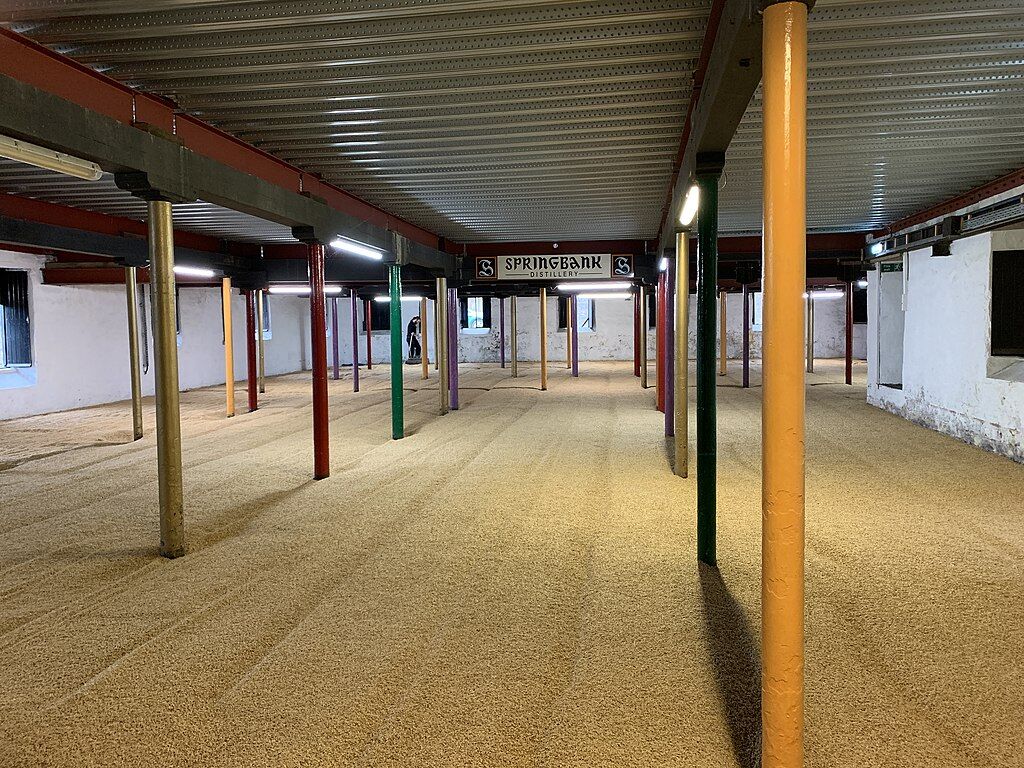
While most beer brewers do not make their own malt, some malt whisky makers do still malt their own grains. Floor malting is the most traditional method.

malt vs. koji
The malting floor at the fabled Springbank Distillery in Campbelltown, Scotland.

Kojifying

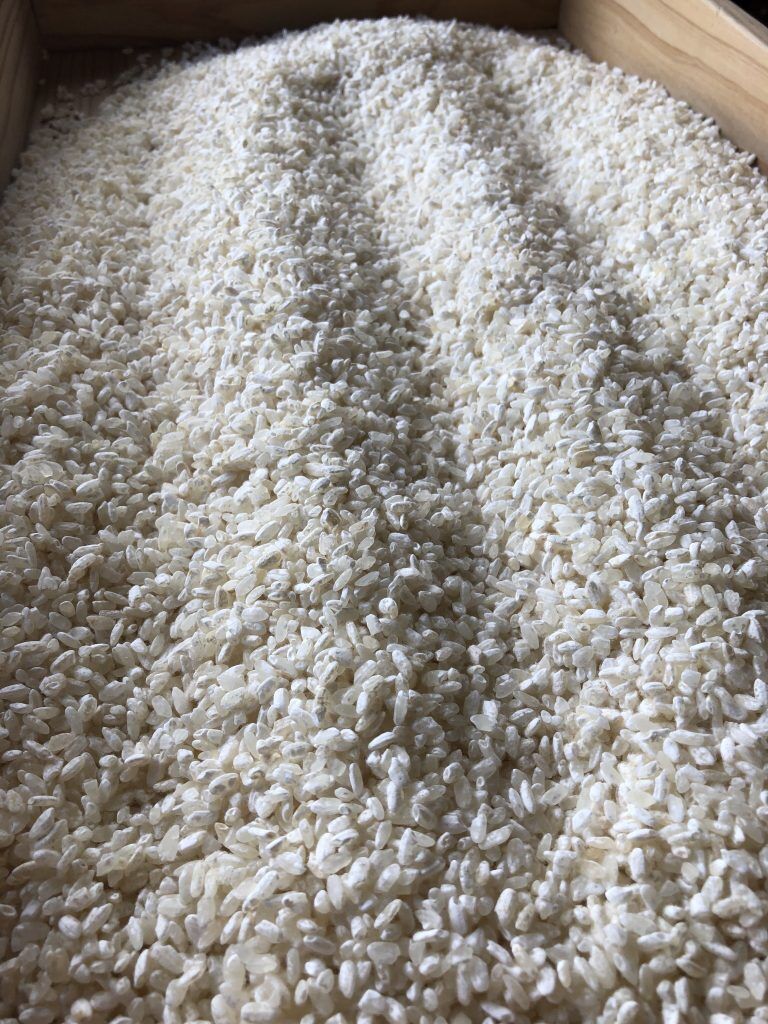
We are committed to making kojify a verb so we will keep using it until we hear others do the same. This is the process of converting the starch in a grain or other substrate into soluable sugars using koji mold. In Japan, once you’ve grown koji mold on rice it’s no longer considered rice. It is now something else. It’s rice koji.

Koji mold spores being propagated onto freshly steamed rice at Yamatozakura Distillery in Kagoshima Prefecture.

Unlike malting, which relies on the grain’s own enzymatic activities to saccharify the starches, kojifying uses the mold’s enzymatic activity to do the work. In order for koji to innoculate the grains, they need to be polished before being steamed. This is distinctly different from malting, which relies on whole grains.

Rice koji just before being moved into a primary fermentation.

Fermentation Processes

Besides the obvious difference of germination vs. mold propagation between malting and koji, there are also differences in the brewing process. For malt brewing, the sugars are extracted from the grains, the spent grains are disposed of, and the yeasts are introduced to the sugars in a process known as multiple sequential fermentation.

Graphic courtesy of Piero Barbieri, DensityDesign Research Lab

For koji alcohol, this process is a bit different. Both the rice (or barley or sweet potato or buckwheat or corn) koji and yeast are introduced into the same fermentation vessel simultaneously in a process known as multiple parallel fermentation. In this case, the koji continues to break down the starches remaining in the grains while the yeasts begin converting those sugars into alcohol. The koji will also continue to do this process to any new grains or starch sources introduced to the fermentation as is common in shochu production.

Much More to Explore

These show notes just scratch the surface, but should serve as a useful aid as you listen to the episode itself. As always, please feel free to reach out if you have any questions about malt vs. koji.

KANPAI!

Year in Review: Parent Teacher Conference (ep. 26)

December 6, 2021 · 4 Comments

In the 26th and final episode of season one of the Japan Distilled podcast, your hosts Christopher Pellegrini and Stephen Lyman reflect on the the year in review and muse about what might happen in season two.

CREDITS

Theme Song: Begin Anywhere by Tomoko Miyata (http://tomokomiyata.net/)

Mixing and Editing: Rich Pav (https://www.uncannyjapan.com/)

HOSTS

CHRISTOPHER PELLEGRINI Vermont born and bred, long-time Tokyo resident and author of The Shochu Handbook, Christopher learned about delicious fermentations as a beer brewer at Otter Creek (Middlebury, VT). He now spends most of his waking hours convincing strangers that shochu and awamori are unlike anything they’ve ever tried before. 

STEPHEN LYMAN discovered Japan’s indigenous spirits at an izakaya in New York City. He was so enthralled that he now lives in Japan and works in a tiny craft shochu distillery every autumn. His first book, The Complete Guide to Japanese Drinks, was nominated for a 2020 James Beard Award.

Stephen and Christopher are very glad to have the first season finished and are happy to bring you this year in review.

If you have any comments or questions about this episode of Japan Distilled, please reach out to Stephen or Christopher via Twitter. We would love to hear from you. 

SHOW NOTES

Year in Review

Thank you.

As we reflect on season one and the journey from our 1st pronunciation guide to our unexpectedly fun 25th episode on chuhai, our primary realization is how much we appreciate you, the listeners. Your feedback and encouragement over the past year has been fantastic.

Rich Pav

As you know if you listened to the episode, our editor Rich Pav appeared as our first guest on the show. This was to get his feedback on how the show has been, let folks get to know him a bit, and to practice interviewing. His own reflections on our year in review are enlightening and encouraging. Have a listen.

rich pav
Rich Pav on location somewhere in (uncanny) Japan.

For those of you who would like to reach out to him for assistance with your own podcasts or other audio projects, you can reach him at rich dot pav at gmail dot com or through Twitter at HelloFrmJapan (his DMs are open).

Much More to Explore

We look forward to rolling up our sleeves and getting back to work with new episodes coming to you in January 2022. Next season will include deeper dives into some topics we have already covered as well as a series of interviews with industry professionals from across the globe.

KANPAI!

  • « Go to Previous Page
  • Page 1
  • Interim pages omitted …
  • Page 12
  • Page 13
  • Page 14
  • Page 15
  • Page 16
  • Interim pages omitted …
  • Page 19
  • Go to Next Page »

Primary Sidebar

Never miss a new episode. Subscribe now

Japan Distilled

Copyright © 2026 · Log in