• Skip to primary navigation
  • Skip to main content
  • Skip to primary sidebar
Japan Distilled logo in black.

Japan Distilled

Home of the Japan Distilled Podcast

  • Home
  • Podcast Episodes
  • About Us
  • Contact Us
  • Show Search
Hide Search

Podcast

Sublime Satsuma Shochu (Ep. 44)

September 27, 2022 · 1 Comment

INTRO

In episode 44, our hosts finish a 3 part series into the WTO Geographic Indications with a deep dive into Satsuma Shochu, the Bordeaux of the Japanese spirits world.

CREDITS

Theme Song: Begin Anywhere by Tomoko Miyata (http://tomokomiyata.net/)

Mixing and Editing: Rich Pav (https://www.uncannyrobotpodcast.com/)

HOSTS

CHRISTOPHER PELLEGRINI Vermont born and bred, long-time Tokyo resident and author of The Shochu Handbook, Christopher learned about delicious fermentations as a beer brewer at Otter Creek (Middlebury, VT). He now spends most of his waking hours convincing strangers that shochu and awamori are unlike anything they’ve ever tried before. 

STEPHEN LYMAN discovered Japan’s indigenous spirits at an izakaya in New York City. He was so enthralled that he now lives in Japan and works in a tiny craft shochu distillery every autumn. His first book, The Complete Guide to Japanese Drinks, was nominated for a 2020 James Beard Award.

Stephen and Christopher probably drink more Satsuma shochu than anything else, well, other than water.

If you have any comments or questions about this episode, please reach out to Stephen or Christopher via Twitter. We would love to hear from you. 

SHOW NOTES

WTO Geographic Indications

WTO Geographical indications, or GIs, are “place names (in some countries also words associated with a place) used to identify the origin and quality, reputation or other characteristics of products” (for example, “Champagne”, “Tequila” or “Roquefort”). These are products that are so linked to a place that they become almost inseparable. You can make sparkling wine nearly anywhere, but you cannot call it champagne unless its made in Champagne, France. Same for Brandy made in Cognac. That’s Cognac. Everything else is Brandy.

Japanese sake has received GI status, but since were are interested in distilled spirits here on this podcast, we are focused on the shochu producing regions that have been granted GI status. These are Kuma Shochu (episode 42, rice shochu produced in Kumamoto’s Kuma River Basin), Iki Shochu (episode 43, barley shochu made on Iki Island in Nagasaki), and Satsuma Shochu (this episode, sweet potato shochu made in Kagoshima).

Satsuma Shochu is sweet potato shochu made with sweet potatoes grown in Kagoshima Prefecture, koji produced in Kagoshima Prefecture, which is completely fermented, distilled, and bottled in Kagoshima Prefecture. Today’s Kagoshima Prefecture was known as the Satsuma Domain during the Tokugawa era and while the borders don’t align perfectly, Satsuma Domain was where the sweet potato was introduced to Japan in the early 1700s.

With over 100 active distilleries in the prefecture (some making kokuto sugar shochu in the Amami Islands), there are literally thousands of Satsuma Shochu brands available to the Japanese drinking public. Some of these brands have become incredibly popular and demand a premium price whenever you can find them.

satsuma shochu
Not a comprehensive map, but gives you a sense of how many distilleries there are.
Courtesy of sake-hono.com

Satsuma Shochu Styles

Just a few years ago, Dancyu magazine sponsored a blind tasting competition of three predominant styles of sweet potato shochu: light body, medium body, and full body. Today that spectrum would be completely inadequate to describe the variety of styles now available. While there are still light, medium, and full bodied Satsuma Shochu in the traditional spectrum of styles, the new fruity, highly aromatic sweet potato shochu that are highly yeast-driven do not fit neatly in those categories as they defy those richness definitions.

Add to that the koji varieties, more than 50 different sweet potatoes used in shochu production, aging vessels, and filtration, and you have an extremely diverse style of traditional honkaku shochu. Each of those production considerations will yield a different expression and many of them will defy what has traditionally been thought of as “smelly sweet potato shochu” in Japan.

The Three M’s

While there are thousands of Satsuma Shochu brands, we will stick to the 3 M’s in this review. Those are the three most famous shochu available in all of Japan.

Maou, Muraou, and Mori Izo.

Maou (far left in photo above) is a vacuum distilled yellow koji Satsuma Shochu that expresses beautiful aromatics and plays very well with soda. This would best be described as “light” based on the Dancyu definition.

Muraou (center in photo above) is an atmospheric black koji Satsuma Shochu that goes incredibly well with hot water. This would best fit the “rich” Dancyu definition.

Mori Izo (far right in photo above) is inarguably the most famous shochu in Japan at present. This atmospheric white koji Satsuma Shochu plays very well on the rocks or with hot water. This would best fit the “medium” Dancyu definition.

The Satsuma Shochu Mark

The Satsuma Shochu mark is probably the most recognizable GI mark used in the shochu industry, perhaps simply because it appears so often on shochu brands throughout the country. Look for it on export bottles to know that you’ve found yourself a Satsuma Shochu. Enjoy!

Satsuma Shochu GI Mark
The Satsuma Shochu WTO Geographic Indication Logo.

Kanpai!

Tiny Iki Shochu (Ep. 43)

September 11, 2022 · Leave a Comment

INTRO

In episode 43, our hosts continue a 3 part exploration into the WTO Geographic Indications for shochu made in Kyushu and surrounding islands. For this episode, we dive into Iki Shochu in particular.

CREDITS

Theme Song: Begin Anywhere by Tomoko Miyata (http://tomokomiyata.net/)

Mixing and Editing: Rich Pav (https://www.uncannyrobotpodcast.com/)

HOSTS

CHRISTOPHER PELLEGRINI Vermont born and bred, long-time Tokyo resident and author of The Shochu Handbook, Christopher learned about delicious fermentations as a beer brewer at Otter Creek (Middlebury, VT). He now spends most of his waking hours convincing strangers that shochu and awamori are unlike anything they’ve ever tried before. 

STEPHEN LYMAN discovered Japan’s indigenous spirits at an izakaya in New York City. He was so enthralled that he now lives in Japan and works in a tiny craft shochu distillery every autumn. His first book, The Complete Guide to Japanese Drinks, was nominated for a 2020 James Beard Award.

Stephen and Christopher love everything about Iki Island except leaving.

If you have any comments or questions about this episode, please reach out to Stephen or Christopher via Twitter. We would love to hear from you. 

SHOW NOTES

WTO Geographic Indications

WTO Geographical indications, or GIs, are “place names (in some countries also words associated with a place) used to identify the origin and quality, reputation or other characteristics of products” (for example, “Champagne”, “Tequila” or “Roquefort”). These are products that are so linked to a place that they become almost inseparable. You can make sparkling wine nearly anywhere, but you cannot call it champagne unless its made in Champagne, France. Same for Brandy made in Cognac. That’s Cognac. Everything else is Brandy.

Japanese sake has received GI status, but since were are interested in distilled spirits here on this podcast, we are focused on the shochu producing regions that have been granted GI status. These are Kuma Shochu (rice shochu produced in Kumamoto’s Kuma River Basin), Iki Shochu (barley shochu made on Iki Island in Nagasaki), and Satsuma Shochu (sweet potato shochu made in Kagoshima). Over the next 3 episodes we will explore each of these in turn.

Iki Shochu is barley shochu made on Iki Island in Nagsaski Prefecture. The koji must be propogated on rice with barley added to the 2nd fermentation. On top of that, the mash bill must consist of 1/3 rice and 2/3 barley. Despite these limitations, the style has a wide range of flavor and aroma thanks to decisions about yeast, koji variety, fermentation temperature and time, still design, and aging.

These are just 7 active distilleries on Iki Island, which as you can see from the map below (dark pink island) is quite far from the rest of Nagasaki Prefecture. It’s about 20km from north to south.

Iki Shochu
Iki Island (dark pink island north of Saga Prefecture) is quite far from the rest of Nagasaki, which occupies Southwestern Kyushu.

Iki Shochu Styles

Iki Shochu can probably be broken down into three primary styles. The most common is vacuum distilled using premium rice and white koji for fermentation. Another popular style would be that same distillate, but aged in oak. In fact, the best selling brand, Iki Super Gold, is made this way. However, unlike nearby Oita Prefecture, known primarily for making 100% barley shochu, many more Iki Shochu are traditional atmospheric distillates, which are full of grain, nut, and other rich flavors.

Select Iki Shochu Brands

Iki Super Gold – a 22% vacuum distilled barrel aged shochu that’s found all over Northern Kyushu. The ABV is an odd ball in the shochu world, but we can’t complain about the quality of the drink.

Iki Super Gold (22% ABV)

Chingu – Both vacuum (green bottle) and atmospheric (brown bottle) versions of this handmade shochu are produced as the smallest distillery in Iki. Probably the most famous Iki Shochu brand among shochu enthusiasts.

Chingu “White” Vacuum Distilled Barley Shochu
Chingu “Black” Atmospheric Distilled Barley Shochu

Yamanomori – a traditional, atmospheric distilled shochu that’s available in many overseas markets.

The Iki Shochu Mark

Iki Shochu recently revised their mark of excellence so if you see this on a bottle, you know you’ve got the real deal.

Kanpai!

Elegant Kuma Shochu (Ep. 42)

August 26, 2022 · Leave a Comment

INTRO

In episode 42, our hosts begin a 3 part exploration into the World Trade Organization Geographic Indications for shochu made in Kyushu and surrounding islands. For this episode, we dive into Kuma Shochu in particular.

CREDITS

Theme Song: Begin Anywhere by Tomoko Miyata (http://tomokomiyata.net/)

Mixing and Editing: Rich Pav (https://www.uncannyrobotpodcast.com/)

HOSTS

CHRISTOPHER PELLEGRINI Vermont born and bred, long-time Tokyo resident and author of The Shochu Handbook, Christopher learned about delicious fermentations as a beer brewer at Otter Creek (Middlebury, VT). He now spends most of his waking hours convincing strangers that shochu and awamori are unlike anything they’ve ever tried before. 

STEPHEN LYMAN discovered Japan’s indigenous spirits at an izakaya in New York City. He was so enthralled that he now lives in Japan and works in a tiny craft shochu distillery every autumn. His first book, The Complete Guide to Japanese Drinks, was nominated for a 2020 James Beard Award.

Stephen and Christopher get excited about Kuma Shochu, especially the handmade kind.

If you have any comments or questions about this episode, please reach out to Stephen or Christopher via Twitter. We would love to hear from you. 

SHOW NOTES

WTO Geographic Indications

WTO Geographical indications, or GIs, are “place names (in some countries also words associated with a place) used to identify the origin and quality, reputation or other characteristics of products” (for example, “Champagne”, “Tequila” or “Roquefort”). These are really products that are so linked to a place that they become inseparable. You can make sparkling wine almost anywhere, but you can’t call it champagne unless its made in Champagne, France. Same for Brandy made in Cognac. That’s Cognac. Everything else is Brandy.

Japanese sake has received GI status, but since were are interested in distilled spirits here on this podcast, we are focused on the shochu producing regions that have been granted GI status. These are Kuma Shochu (rice shochu produced in Kumamoto’s Kuma River Basin), Iki Shochu (barley shochu made on Iki Island in Nagasaki), and Satsuma Shochu (sweet potato shochu made in Kagoshima). Over the next 3 episodes we will explore each of these in turn.

Kuma Shochu is rice shochu made in the Kuma River Basin region of Kumamoto Prefecture. The Kuma River is a fast flowing, pristine water source and Kuma Shochu must be made from water from the river’s underground springs as well as rice. While the rice does not need to be grown in the Kuma River Basin, many premium brands only use locally grown rice.

kuma shochu map
Map of the distilleries in the Kuma River Basin.

(for an interactive map of distillery locations click this link)

These are 27 active distilleries in the Kuma River Basin, which incorporates the city of Hitoyoshi and the surrounding agricultural lands within the basin. A 28th distillery was destroyed in a recent flood with a hope to rebuild and restart production. 

Kuma Shochu Styles

Note that the “kuma” in Kuma Shochu (球磨 in 球磨焼酎 which would literally translate to something like “ball polishing” due to the fast flowing water) is different than the “kuma” in Kumamoto (the 熊 in 熊本, which means “bear” as in the mammal).

Kuma Shochu can probably be broken down into three primary styles. The most common is vacuum distilled using premium Japanese rice and white or yellow koji for fermentation. Another popular style would be that same distillate, but aged in oak. Finally, traditional atmospheric rice shochu distillates are still made by some resolute distilleries.

Select Kuma Shochu Distilleries

Takahashi Distillery – largest producer in the area, making 50% of all rice shochu sold in Japan. Most popular brand is Hakutake Shiro. Reputation for light, easy drinking shochu with lovely aromas of fruit and flowers.

Hakutake Shiro with an out of place Kuro Jokka (Kagoshima serviceware).

Sengetsu Distillery – located in Hitoyoshi City, Sengetsu is a popular tourist destination since it’s a short walk from the main train station. They were the first rice shochu maker to export to the United States and today have several brands available in many countries across the world including their main brand Sengetsu, Kawabe (using sake yeast), and Mugon (barrel aged).

Sengetsu’s Kawabe Kuma Shochu.

Fukano Distillery – Situated not far from Takahashi, Fukano has a wide variety of expressions of Kuma Shochu and a strong barrel management program. So much so that Fukano koji whisky is sold in the United States.

Toyonaga Distillery – claiming to be the furtherst up the river (implying the purest water), Toyonaga makes a variety of rice shochu including their main Toyonaga brands (both vacuum and atmospheric available) and Jigaden (atmospheric expression made from organic rice grown behind the distillery).

Jufuku Distillery – the smallest distillery making Kuma Shochu. They only make atmospheric expressions by hand. Mushagaeshi is their main brand and the Mushagaeshi black label is aged for 10 years before bottling. 

Mushagaeshi, Jufuku’s main brand.

Torikai Disitllery – situated on a mountaintop, Torikai makes only one brand, which is a ginjo quality vacuum distilled rice shochu made with yellow koji, sake yeast, and a 45 day low temperature fermentation. As elegant a drink as you’ll ever find.

How to Help

Restoration of Hitoysohi and other areas affected by the 2020 floods continues. If you would like to learn more or are interested in helping, please visit this link.

Kanpai!

Yeast is a Beast (Ep. 41)

August 12, 2022 · Leave a Comment

INTRO

In episode 41 of the Japan Distilled podcast, your hosts Christopher Pellegrini and Stephen Lyman roll up their sleeves and dive back into a very specific aspect of alcohol production: the absolute necessity of yeast.

CREDITS

Theme Song: Begin Anywhere by Tomoko Miyata (http://tomokomiyata.net/)

Mixing and Editing: Rich Pav (https://www.uncannyrobotpodcast.com/)

HOSTS

CHRISTOPHER PELLEGRINI Vermont born and bred, long-time Tokyo resident and author of The Shochu Handbook, Christopher learned about delicious fermentations as a beer brewer at Otter Creek (Middlebury, VT). He now spends most of his waking hours convincing strangers that shochu and awamori are unlike anything they’ve ever tried before. 

STEPHEN LYMAN discovered Japan’s indigenous spirits at an izakaya in New York City. He was so enthralled that he now lives in Japan and works in a tiny craft shochu distillery every autumn. His first book, The Complete Guide to Japanese Drinks, was nominated for a 2020 James Beard Award.

Stephen and Christopher have a deep and abiding respect for this single celled organism.

If you have any comments or questions about this episode, please reach out to Stephen or Christopher via Twitter. We would love to hear from you. 

SHOW NOTES

World’s Biggest Overachiever?

There may be no single cell organism more vital to human civilization. Archeologists have discovered ruins of ancient civilizations in which it was clear that they were working with yeast even if it wasn’t actually identified as a living organism until Louis Pasteur in the 1850s.

yeast
Yeast under a microscope.

Yeast has been used to make bread and alcohol since time immemorial. While you can make unleavened bread without it, you simply cannot efficiently make ethanol without yeast.

The Science of Yeast

This single celled organism has two respiratory pathways. One for an oxygen rich (aerobic) environment and one for an oxygen poor (anaerobic) environment. When the aerobic respiratory pathway is activated, the yeast will convert oxygen and sugar into water and carbon dioxide (CO2). When the anaerobic pathway is activated, it will convert the sugar into CO2 and alcohol. Therefore, alcohol fermentations are almost always submerged in liquid to deprive the yeast of oxygen.

The Art of Yeast

Yeast’s primary job in alcohol production is to convert sugars to alcohol, but it also adds flavors and aromas both through by products it creates while alive, but also when its cells die their own enzymes digest their bodies into aroma and flavor compounds. Managing this delicate balance of flavor and aroma derived is one of the arts of alcohol production.

Types of Yeast

There are hundreds if not thousands of species in the world. Yet one, saccharomyces cerevisiae is dominant for both bread and alcohol production. While this particular species shares the same DNA, strains of s. cerevisiae used for bread and alcohol are different. In fact, the strains used for beer versus wine versus sake versus spirits are different as well. Bread yeast is more resistant to the adverse conditions present in an oven while alcohol yeasts remain active at higher alcohol concentrations. And of course, those used for wine can remain active in high alcohol concentrations than those used for beer.

Of course, each yeast has its own flavor and aroma characteristic as well. Many have been cultivated specifically to express green apple or star anise or banana notes. As a result, yeast may very well have a larger impact on the final product than any other component other than the main ingredient and sometimes even that.

Much More to Explore

Of course, there is certainly much more to learn. Please have a listen and let us know what you think.

Kanpai!

Silly Liquor Laws (Ep. 40)

July 27, 2022 · Leave a Comment

In episode 40 of the Japan Distilled podcast, your hosts Christopher Pellegrini and Stephen Lyman tackle the scintillating topic of absolutely absurd liquor laws in the United States. While this episode is very US-focused, we promise the episode will be entertaining for listeners worldwide who may enjoy listening to a couple of Yanks poke fun at their countrymen.

CREDITS

Theme Song: Begin Anywhere by Tomoko Miyata (http://tomokomiyata.net/)

Mixing and Editing: Rich Pav (https://www.uncannyrobotpodcast.com/)

HOSTS

CHRISTOPHER PELLEGRINI Vermont born and bred, long-time Tokyo resident and author of The Shochu Handbook, Christopher learned about delicious fermentations as a beer brewer at Otter Creek (Middlebury, VT). He now spends most of his waking hours convincing strangers that shochu and awamori are unlike anything they’ve ever tried before. 

STEPHEN LYMAN discovered Japan’s indigenous spirits at an izakaya in New York City. He was so enthralled that he now lives in Japan and works in a tiny craft shochu distillery every autumn. His first book, The Complete Guide to Japanese Drinks, was nominated for a 2020 James Beard Award.

Stephen and Christopher have been battling these silly rules for years.

If you have any comments or questions about this episode, please reach out to Stephen or Christopher via Twitter. We would love to hear from you. 

SHOW NOTES

The OG Silly Liquor Law: Prohibition

What are you people doing?! Please stop!

The 18th amendment to the US constitution made the distribution and sale of alcohol illegal in the US as of January 17, 1920. As you all well know, this led to bootlegging, illicit distillation, speakeasys, and all sorts of roaring twenties shenanigans. Fortunately, the 21st Amendment repealed prohibition in 1933, but the damage was done. What was left in its wake was a regulatory morass as the country made booze legal again.

The TTB

The TTB is the Alcohol and Tobacco Tax and Trade Bureau. Established in 2003, they are responsible for all regulatory issues surrounding federal import and distribution of beverage alcohol. They are authorized to classify alcohol to such a degree that there are over 40 different recognized categories of whisky, a dozen or more brandy categories, and dozens of other recognized spirits categories.

Unrecognized? Any Asian Spirits whatsoever. No shochu, no awamori, no soju, no baijiu. Very European focused. Silly liquor law? We think so.

They are also authorized to add new categories, but have added precisely 1 near category (Brazilian cachaça) in nearly two decades of operation. And cachaça only got recognition since the US wanted Brazil to recognize Tennessee Sour Mash and Kentucky Bourbon as uniquely American spirits traditions. Clearly a lot of work to do to catch up with reality. TTB, c’mon guys, you can do it!

California Soju Law

In 1998, Korean American restaurant industry lobbyists, no doubt backed by “Big Soju” lobbied successfully to allow California beer and wine soft liquor license holders to sell soju if it was imported and bottled at 24% ABV or less. This intentionally blocked domestic releases of Japanese shochu, which is almost always bottled at 25%, but that didn’t stop some Japanese makers from taking advantage of the loophole.

The rule only said the product needed to be imported, so Japanese suppliers began labeling 24% ABV versions of their domestic products as soju to gain access to the enormous California marketplace. Rational to a degree, but created enormous consumer confusion and still does to this day.

Silly liquor law? We know so.

New York Soju Law

Inspired no doubt by California, New York based lobbyists quickly followed suit and got soju approved for soft license sale at 24% ABV or less so long as it was made in Korea. The law was passed in 2002 and ever since Korean soju has been available on soft license while 24% ABV shochu bottled for California has been restricted to hard license shops statewide.

liquor law
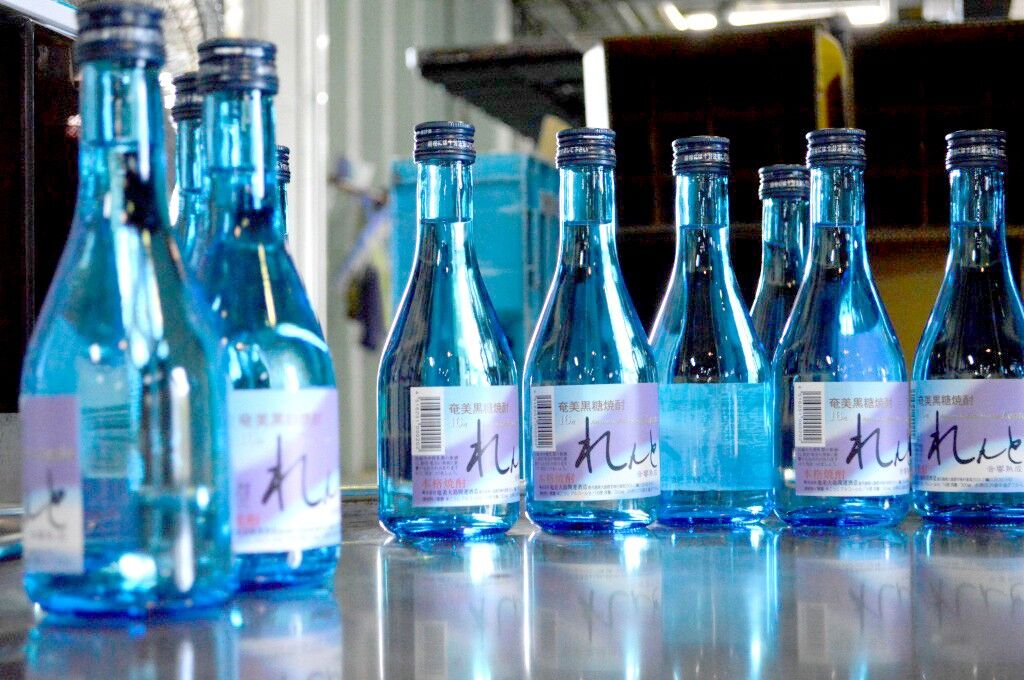
Lento Kokuto Sugar Shochu can now be sold in NY with a soft liquor license if bottled at 24% ABV or less.

Fortunately, that law was revised in July 2022 (the inspiration for this episode).

Specifically, the legislation reads:

Such license shall in form and in substance be a license to the person specifically licensed to sell wine at retail, to be consumed upon the premises. Such license shall also be deemed to include a license to sell beer [and], soju AND SHOCHU at retail to be consumed under the same terms and conditions without the payment of any additional fee. For the purposes of this subdivision:

…

(B) “SHOCHU” SHALL MEAN AN IMPORTED JAPANESE ALCOHOLIC BEVERAGE THAT CONTAINS NOT MORE THAN TWENTY-FOUR PER CENTUM ALCOHOL, BY VOLUME, AND IS DERIVED FROM AGRICULTURAL PRODUCTS.

Finally, New York diners and drinkers can enjoy shochu at fine Japanese restaurants throughout the state who do not have hard liquor licenses.

Their silly liquor law just became a bit less silly.

Much More to Explore

Of course, we dive into several other silly laws and give plenty of commentary on these and other rules. Please have a listen and let us know what you think.

Kanpai!

  • « Go to Previous Page
  • Page 1
  • Interim pages omitted …
  • Page 9
  • Page 10
  • Page 11
  • Page 12
  • Page 13
  • Interim pages omitted …
  • Page 19
  • Go to Next Page »

Primary Sidebar

Never miss a new episode. Subscribe now

Japan Distilled

Copyright © 2026 · Log in