• Skip to primary navigation
  • Skip to main content
  • Skip to primary sidebar
Japan Distilled logo in black.

Japan Distilled

Home of the Japan Distilled Podcast

  • Home
  • Podcast Episodes
  • About Us
  • Contact Us
  • Show Search
Hide Search

Podcast

BONUS EPISODE! Japan Distilled Koji Spirits Cocktail Competition Results (ep. 58B)

May 19, 2023 · Leave a Comment

EPISODE INTRO

In this bonus episode addendum to the 58th episode of the Japan Distilled podcast, guest host Matt Alt joins Stephen Lyman to reveal and discuss the finalists for the 1st ever Japan Distilled Koji Spirits Cocktail Competition.

CREDITS

Theme Song: Begin Anywhere by Tomoko Miyata (http://tomokomiyata.net/)

Mixing and Editing: Rich Pav (https://www.uncannyjapan.com/)

HOSTS

STEPHEN LYMAN discovered Japan’s indigenous spirits at an izakaya in New York City. He was so enthralled that he now lives in Japan and works in a tiny craft shochu distillery every autumn. His first book, The Complete Guide to Japanese Drinks, was nominated for a 2020 James Beard Award.

MATT ALT Author of numerous books including his most recent, Pure Invention: How Japan Made the Modern World, is an exploration of Japan’s incredible post-war rise to commercial diplomacy juggernaut. He’s also an accomplished drinks writer and cocktail historian.

If you have any comments or questions about the competition, please reach out to Stephen or Matt via Twitter. We would love to hear from you. 

SHOW NOTES

The Rules

  1. Create an original cocktail using a koji spirit base. Any koji spirit is welcome, though honkaku shochu and Ryukyu Awamori are preferred.
  2. Needs to be simple enough to make that a well stocked cocktail bar can make the drinks if provided with the appropriate base spirit.
  3. 5 finalists will be selected to have their cocktails made by a professional.
  4. Judges will rate the drinks based on “would I order another one now or in the future” on a scale of 1 (no) to 5 (absolutely).

The judges were Japan Distilled co-host Stephen Lyman, frequent Japan Distilled guest host Matt Alt, graphic designer and friend of the podcast Pablo Pineda, and Fukuoka denizen and shochu fan Yuko Nonaka.

Left to Right: Pablo, Yuko, Takuma, Matt, and Stephen

The Finalists

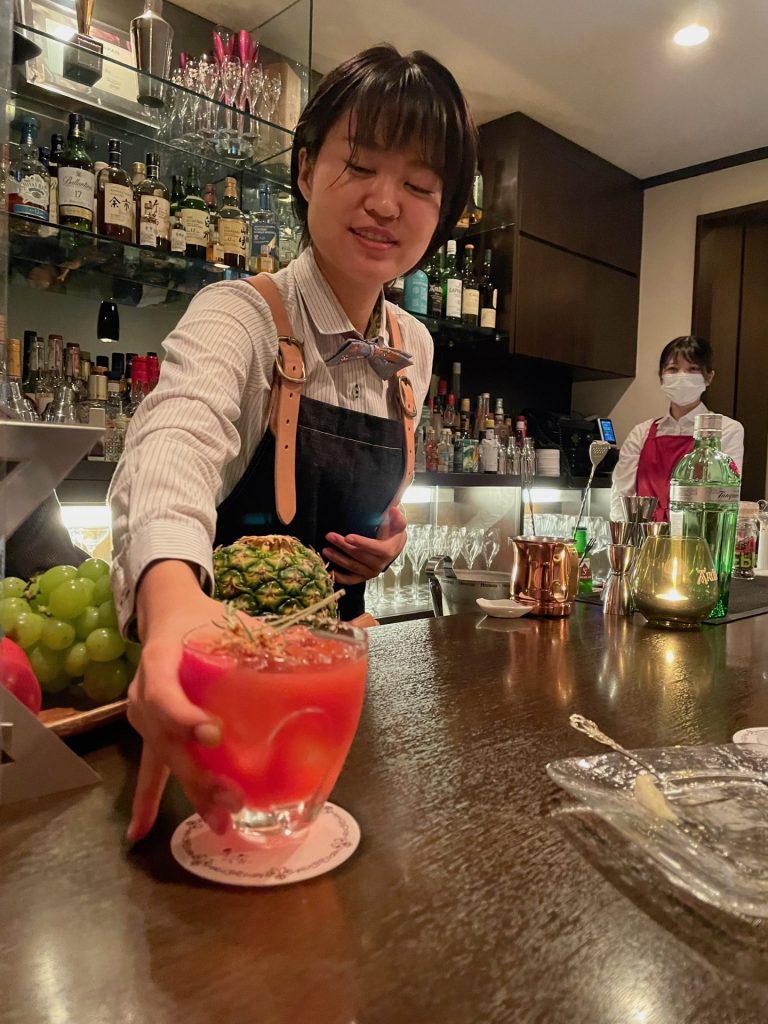
Out of the dozens of submissions we received, we chose 5 finalists to be made at Bar Ugle in Fukoka by Takuma Tsutsumi.

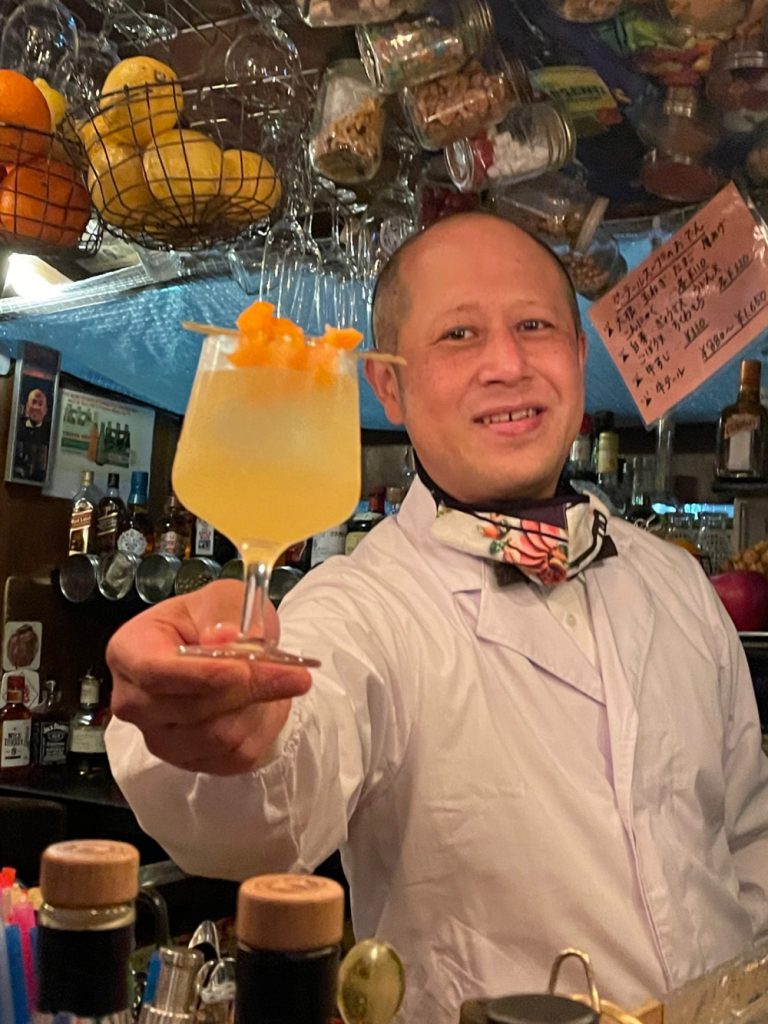
Head Bartender Takuma Tsutusmi of Bar Ugle in Fukoka City.

Tsutsumi-san prepared all of the various juices, syrups, and other ingredients over the course of the week before the final judging for the competition, which was held on April 15, 2023.

All of the cocktails were very enjoyable.

The Untitled Cocktail

The Untitled Cocktail was submitted without a name, thus Untitled.

Ingredients:

3 oz Mizu Lemongrass Shochu

½ oz satsuma tangerine vanilla syrup

mist of 1:5 mixture of fish sauce and heavily peated scotch whisky

satsuma tangerine rind, thinly sliced

Instructions:

shake shochu and syrup on crushed ice. 

Served up, pour over candied tangerine rind, mist with peated fish sauce concoction

Creator: Ben Samuelson, Monroe, Maine

Feedback: Sadly, Mizu Lemongrass Shochu is not a domestic product here in Japan and we were unable to source it in time for the finals. A vacuum distilled rice shochu was substituted, but that did not rescue the drink. The vanilla did not have the lemongrass to offset its strong flavor.

Shochu Want Me, Baby!

Shochu Want Me, Baby! was an ambitious drink.

Ingredients:

2 oz Goro Satsuma Shochu (sweet potato)

¾ oz orange curaçao 

¾ oz lime juice

¾ oz ginger syrup

½ oz cucumber juice

⅛ tsp yuzukosho (the green stuff)

Garnish: lime wheel (dehydrated if you got it) and a few sprigs of cilantro

Instructions:

Low ball whiskey glass, 1 large ice cube. 

Add all ingredients to shaker, shake and double strain over the large ice cube.

Creator: Garrett Ryan, Minneapolis, Minnesota

Feedback: The lime juice and yuzukosho partnered to overpower the rest of the drink. The shochu barely showed through at all. Could definitely be delicious if the ratios were work-shopped a bit more.

Kyushu 75

Kyushu 75, a riff on a French 75, using rice shochu

Ingredients: 

50ml vacuum distilled rice shochu

20ml yuzu juice

1 teaspoon powdered sugar

90ml champagne 

3-5ml red shiso syrup

Instructions: 

Combine shochu, sugar, yuzu juice and ice in an ice shaker 

Shake and pour into a champagne glass 

Top up with champagne!

Pipette red shiso syrup into bottom of glass.

Creator: Sam Seager, Parts Unknown

Feedback: Not a bad riff on the French 75, but the shochu got lost and the yuzu juice ended up overpowering all but the bubbly. Could definitely work with a little work-shopping on the proportions and choosing just the right champagne and shochu combo.

The Basil Crush

The refreshing Basil Crush

Ingredients:

1.5 oz rice shochu 

4 fresh basil leaves 

1 teaspoon lemon juice 

2 teaspoons simple syrup

4 cucumber slices 

club soda to taste

splash of elderflower liqueur

Instructions:

Muddle the basil, cucumber, syrup, and lemon juice in a tall glass. 

Add shochu, elder flower and ice, mix well top with club soda.

Creator: Carrie Connin, Continental, Ohio

Feedback: Imminently crushable. A near perfect summer refresher. While the rice shochu was great, the drink was elevated by the use of Yokka Koji awamori. We judged based on the rice shochu per the recipe, but the awamori added body and texture lacking with a vacuum distilled rice shochu.

Shiri Shiri

Easily the most complex cocktail, the Shiri Shiri was also the most interesting.

Ingredients:

2 oz Kumejima’s Kumesen Awamori Koshu

2 oz carrot juice

1 oz shikuwasa juice 

0.5 – 0.75 oz kokuto sugar simple syrup

1/8 tsp could konbu dashi

1 egg white 

Shikuwasa zest

Instructions: 

Add all ingredients to cocktail shaker and dry shake until thoroughly combined

Add ice to shaker, shake again until cold

Pour into chilled Ryukyu glass and let rest for a few moments until foam rises to the top

Zest a bit of shikuwasa on top of the foam for decoration

Creator: Andrew Schutts, Brooklyn, NY

Feedback: very complex drink. The consensus among the judges is that this was best described as “soup” and we mean that in the best way possible. It was chewy, rich, decadent, and fascinating. Had to replace Shikuwasa with an alternative citrus due to availability. Like the Basil Crush above, this drink was also improved with the use of Yokka Koji. That spirit’s girth really helped balance everything.

The Winner!?

When all the scores were tallied, we had 2 drinks that rose to the top. The Basil Crush and Shiri Shiri were runaway favorites with both receiving average scores of 4.5 among the judges (2 4s and 2 5s for each of them).

The Basil Crush a robust discussion.

Both drinks garnered by far the most discussion and in both cases Tsutsumi-san was asked to make the drinks again with different base spirits.

The head to head battle was a study in contrasts. The light, refreshing, summery Basil Crush versus the rich, heavy viscous, wintry Shiri Shiri. It’s a little ironic that a drink based on Okinawan food would be the most warming.

Another try at the Shiri Shiri

Ultimately we had to pick a winner and we went back to the foundational principles of the competition – a home cocktail competition. The Basil Crush was awarded the top prize based on that distinction. The Shiri Shiri called for using egg whites in a home cocktail and that is probably too tall a task for many home bartenders.

Neverthless, both of these cocktail creators will be receiving prizes from the Japan Distilled Podcast.
KANPAI!

The Origins of Japanese Cocktail Culture (ep. 58)

May 16, 2023 · Leave a Comment

EPISODE INTRO

In the 58th episode of the Japan Distilled podcast, guest host Matt Alt joins Stephen Lyman to discuss the origins of Japanese cocktail culture.

CREDITS

Theme Song: Begin Anywhere by Tomoko Miyata (http://tomokomiyata.net/)

Mixing and Editing: Rich Pav (https://www.uncannyjapan.com/)

HOSTS

STEPHEN LYMAN discovered Japan’s indigenous spirits at an izakaya in New York City. He was so enthralled that he now lives in Japan and works in a tiny craft shochu distillery every autumn. His first book, The Complete Guide to Japanese Drinks, was nominated for a 2020 James Beard Award.

MATT ALT Author of numerous books including his most recent, Pure Invention: How Japan Made the Modern World, is an exploration of Japan’s incredible post-war rise to commercial diplomacy juggernaut. He’s also an accomplished drinks writer and cocktail historian.

A 50:50 gin martini served up at Bar Erin in Fukuoka.

If you have any comments or questions about Japanese cocktail history or culture, please reach out to Stephen or Matt via Twitter. We would love to hear from you. 

SHOW NOTES

Upheaval

The opening of Japan by Commodore Matthew Perry threw the country into chaos and the early days of western involvement in Japan was nothing like the civilized experiences of the later Meiji and Taisho eras. The first cocktails served in Japan were in western hotels catering to foreign businessmen, but the real establishment of a Japanese cocktail cultures would have to wait several decades.

classic japanese cocktail
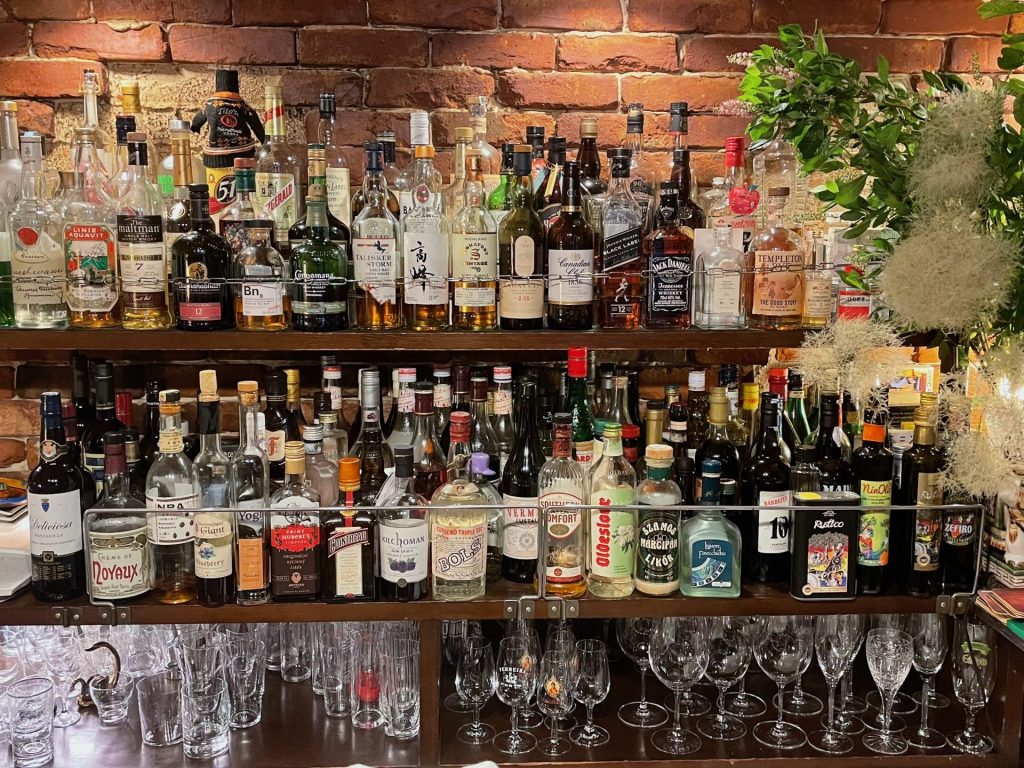
A well stocked bar in Tokyo. Ask for anything.

The professionalization of Japanese cocktails really came with tourism and the establishment of international bartending in the hotels catering to foreign visitors. These bartenders focused on their craft, making the best cocktails available from the ingredients available.

The Japanese Cocktail

The first Japanese cocktail was not created in Japan nor did it represent Japan in any meaningful way. It was created by legendary bartender Jerry Thomas in 1860 in honor of the Japanese legation, the first Japanese diplomatic mission to the United States. However, until this mission, complete with samurai sword wielding dignitaries, came to the US, there was no Japanese presence in the country.

The cocktail, also known as the Mikado, is a weird one. Adapted from David Wonderich’s wonderful, Imbibe!

Ingredients:

15ml orgeat syrup

2.5ml bogart’s bitters

30ml brandy

1 or 2 lemon peels

fill tumbler 1/3 full of ice, add syrup, bitters, and brandy, stir well with a bar spoon.

Originally, this was a rocks drink, so pour the concoction over a fresh glass of ice, garnish with lemon peel(s). However, Dr. Wonderich recommends serving it up after its well chilled with stirring.

It’s believed by Tokyo-based cocktail historian, Kadzuo Ishizura, that Thomas was trying to create a version of Chinese shaoxing wine, which he may have been familiar with due to the large number of Chinese immigrants working in the US at the time.

The Bamboo

Rightly understood as the first cocktail created in Japan that is still sometimes consumed today. The bamboo was created by German-born barman Louis Eppinger who created the drink at the Grand Hotel in Yokohama no later than 1890. May even be weirder than the Japanese. Again, from David Wonderich’s wonderful, Imbibe!

45ml French vermouth

45ml sherry

2 dashes of orange bitters

2 drops of angastora bitters

stirred over cracked ice, strained into a stemmed cocktail glass, squeeze and twist of lemon peel, serve with a pimola or olive.

The Professionalization

Post-WW2, the Japanese bartending community professionalized under guilds dotted throughout the country. Just as with other crafts, apprentices learned international bartending under the watchful eye of their mentors and the masters were every bit as strict as in other disciplines. Today hundreds of cocktail bars throughout Japan can trace their roots to proteges of these post-war pioneers.

Yatai Bar Ebichan in Fukuoka where you can get any cocktail you can imagine in a streetside stand.

As with cruise ships and grand hotels, the bartenders are almost always clothed a tuxedo or at least a bow tie and are nearly always men. But these things are changing, and for the better.

Yui Odata of Wine&Bar Mugiya in Miyazaki, 2022 Diageo Japan Champion.

The winner of the 2022 Diageo World Class Japan final was Yui Odata of Wine&Bar Mugiya in Miyazaki City down in southern Kyushu. She has proven once and for all that women are every bit as capable of being world class bartenders in Japan. Highly recommend a visit and strongly suggest you go early and order whatever she wants to serve you.

KANPAI!

Funky Sanaburi Shochu (Ep. 57)

April 25, 2023 · Leave a Comment

Episode Intro

In episode 57 of the Japan Distilled podcast, your host Stephen Lyman is joined by author and podcaster Jim Rion for a deep dive on sanaburi shochu, one of the original forms of kasutori shochu.

CREDITS

Theme Song: Begin Anywhere by Tomoko Miyata (http://tomokomiyata.net/)

Mixing and Editing: Rich Pav (https://www.uncannyrobotpodcast.com/)

HOSTS

STEPHEN LYMAN discovered Japan’s indigenous spirits at an izakaya in New York City. He was so enthralled that he now lives in Japan and works in a tiny craft shochu distillery every autumn. His first book, The Complete Guide to Japanese Drinks, was nominated for a 2020 James Beard Award.

JIM RION moved to Yamaguchi Prefecture almost 20 years ago and has since become both an ambassador for the area and also an unquestioned expert in all things Yamaguchi booze. He’s the co-host of the Sake Deep Dive podcast and recently published his first book, Discovering Yamaguchi Sake: a taster’s guide to Breweries, Culture, and Terrain.

Cover for Jim’s book, released in February 2023.

Stephen and Jim bonded over sanaburi shochu exploration.

If you have any comments or questions about this episode, please reach out to Stephen or Jim via Twitter. We would love to hear from you. 

Show Notes

We first introduced kasutori shochu in episode 17 where we did touch briefly on sanaburi shochu, also known as sanabori shochu. To get some background, please listen to that episode before this one if you haven’t already.

In this episode, Jim Rion joins Stephen to dig into perhaps the most traditional style of kasutori shochu, sanaburi shochu, which dates back to the Edo period when sake lees were distilled to remove the residual alcohol so the lees could safely be used as fertilizer.

Today sanaburi shochu is classified as seichou kasutori shochu, which would be literally translated as “orthodox sake lees shochu” referring specifically to the fact that this is a very traditional production method. The lees, which are solids, are mixed with the hulls of threshed rice to create space to allow steam to pass through the lees.

Sake lees being mixed with rice hulls at Morinokura Brewery in Fukuoka.

This mixture is placed into a traditdional seirou mushi still, which is a large wooden structure in which steam is passed through to evaporate the alcohol, which is re-condensed when it hits a large metal cauldron on top that is filled with cold water.

The seirou mushi still being prepped for a distillation run. Sake lees are used to seal the gaps in the wooden still to prevent loss of yield.

This style of kasutori shochu was originally associated with a Shinto ritual, which is where the sanabori/sanaburi name came from. This is believed to have originated at the Dazaifu Tenmangu Shrine in Central Fukuoka Prefecture and the production style is still associated with the region.

In fact, the 4 brands that are still sold commercially are all concentrated in western Honshu (Yamaguchi and Shimane) or northen Kyushu (Fukuoka and Saga). However, during the Edo era when there was a push to increase rice production due to a growing population, sanaburi shochu was being made all across Japan to produce fertilizer with the shochu being a byproduct.

Due to the rustic distilling methods, the drink itself is heavily grain or cereal forward with plenty of umami and lots of funk. Not for the faint of heart.

Current Brands

Today we are only aware of 5 brands on the market being made by 4 different sake breweries. Perhaps the most famous and the one with the highest annual production (about 1,500 bottles) is Yaku Dou Kabuto from Morinokura Brewery in Jojima, Fukouka. This brand is produced two weeks a year during the spring and is then rested for 12-13 years before release. It’s bottled at full proof (usually around 35% ABV). The first bottling was the 2002 vintage.

Yaku Dou Kabto 2002 vintage. Just 98 bottles were produced.

Morinokura also makes the Hitachiyama brand, which is a bit more affordable and not aged quite so long.

Hitachiyama from Morinokura.

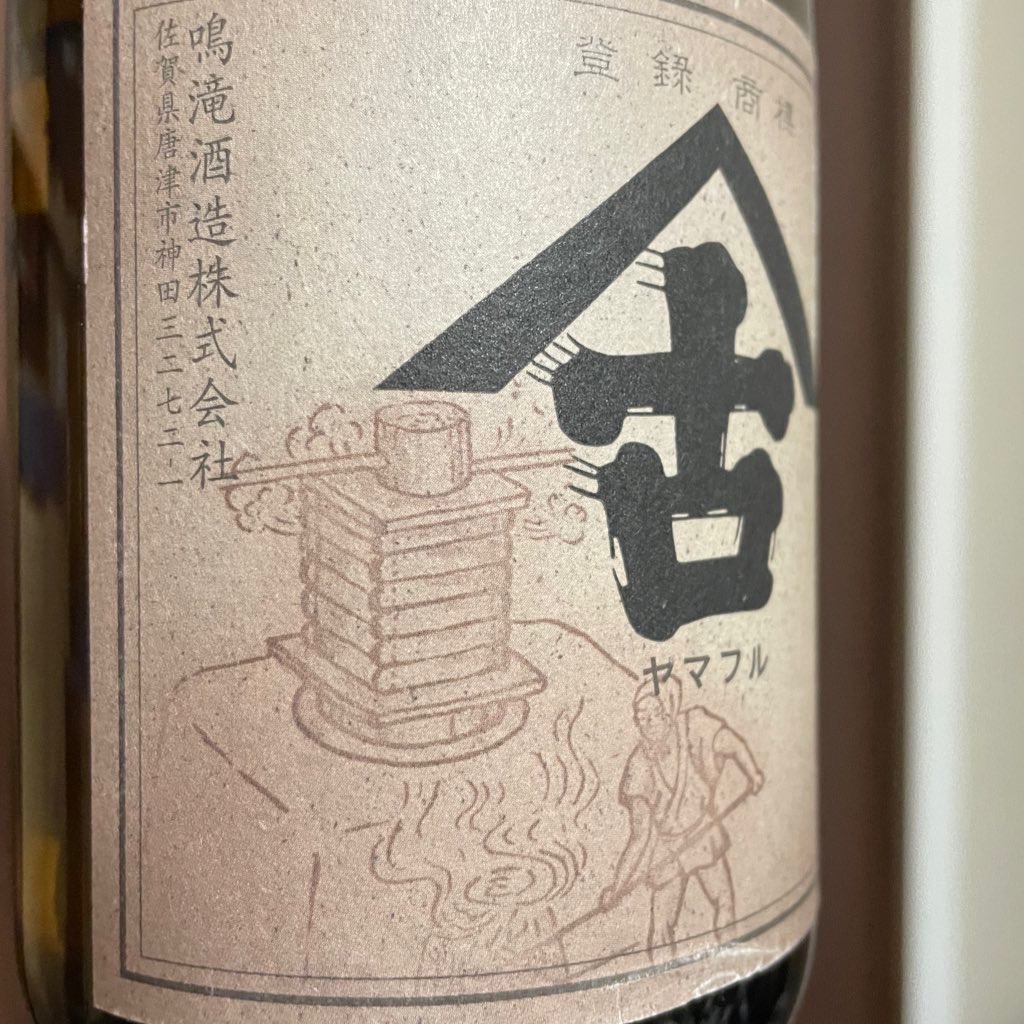
The other Kyushu based brand is Yamafuru from Narutaki Brewery in Karatsu, Saga, which is bottled at 25% ABV. We are uncertain how long it is aged before bottling.

yamafuru sanaburi shochu
Yamafuru with a graphic of the still design.

Up in Yamaguchi, where Jim lives, Sakai Brewery produces the Nishikigawa brand in stealth baby blue packaging. Not the flavor profile we would expect with this bottling.

Nishikigawa from Sakai Brewery in Yamaguchi.

Finally, in Shimane Prefecture, Toyonoaki Brewery makes the Shippo sanaburi shochu, but it is so rare that the only pictures available online are from the brewery website’s product page.

More to Explore

This is, of course, a very unusual shochu style and not only is not much produced, it’s hard to find. If you track some down, please let us know what you think!

KANPAI!

A Hidden Treasure: Ryukyu Awamori (Ep. 56)

April 11, 2023 · Leave a Comment

Episode Intro

In episode 56 of the Japan Distilled podcast, your hosts Christopher Pellegrini & Stephen Lyman dive deeper into Ryukyu Awamori, which is the oldest distilling tradition in Japan.

CREDITS

Theme Song: Begin Anywhere by Tomoko Miyata (http://tomokomiyata.net/)

Mixing and Editing: Rich Pav (https://www.uncannyrobotpodcast.com/)

HOSTS

CHRISTOPHER PELLEGRINI Vermont born and bred, long-time Tokyo resident and author of The Shochu Handbook, Christopher learned about delicious fermentations as a beer brewer at Otter Creek (Middlebury, VT). He now spends most of his waking hours convincing strangers that shochu and awamori are unlike anything they’ve ever tried before. 

STEPHEN LYMAN discovered Japan’s indigenous spirits at an izakaya in New York City. He was so enthralled that he now lives in Japan and works in a tiny craft shochu distillery every autumn. His first book, The Complete Guide to Japanese Drinks, was nominated for a 2020 James Beard Award.

Stephen and Christopher love Okinawan awamori at least as much as Honkaku shochu.

If you have any comments or questions about this episode, please reach out to Stephen or Christopher via Twitter. We would love to hear from you. 

Show Notes

This episode was intended to build upon what was discussed way back in Episode 3: Discover Okinawan Awamori. If you haven’t listened to that one yet, you should probably go back and have a listen to that first. We also discussed quite a bit about Okinawan awamori in Episode 24: Searching for Spirited Shimazake, which focused on spirits made on the outlying islands throughout Japan.

In this latest episode, we spend a lot of time talking about the WTO Geographical Indication (GI) for Ryukyu Awamori, which has protected status just like champagne or congac. We had a series of episodes (42-44) on the WTO protected shochu Geographical Indications: Kuma Shochu, Iki Shochu, and Satsuma Shochu. However, at that time we skipped over Ryukyu Awamori. That may have been a mistake, but now we rectify it with this one.

So what is the Ryukyu Awamori GI?

  • made with black koji from Okinawa
  • made with local Okinawan water
  • made from rice (no other starch source is permitted) with 100% of the rice inoculated with koji before starting the fermentation
  • pot distilled
  • no additives after distillation other than water and time
  • produced, aged, and bottled in Okinawa Prefecture

If any of those standards are not adhered to, it can possibly still be sold as awamori, but it can’t be sold as Ryukyu Awamori. While those are the letter of the law, the spirit of the law is much more detailed. This GI explainer from the National Tax Agency of Japan takes a much deeper look at what truly makes Ryukyu Awamori a spirit worth protecting (see page 27 in particular).

ryukyu awamori
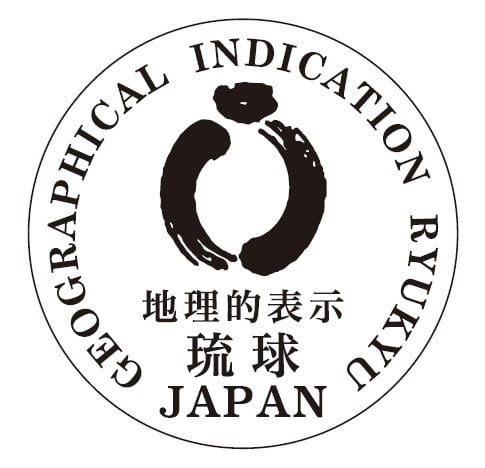
Ryukyu Awamori GI mark from the WTO

Awamori Production

Black koji is an ancient mold from Okinawa that has been used to make awamori for hundreds of years. A part of the GI is that the koji needs to be grown in Okinawa. Also, all of the rice used needs to be propagated with koji before entering the fermentation making it a very unusual style of koji spirit.

A further interesting twist in awamori production is the use of horizontal pot stills rather than the usual upright stills used in most other spirits traditions.

A flock of horizontal pot stills as Kumejima no Kumesen Distillery.

Another thing that makes awamori unique in the spirits world is the use of fractional blending, which uses the shitsugi method. This is a process of blending younger distillate into older vintages to refill ceramic pots. Long aging of awamori in these ceramic jars creates incredibly beautiful spirits.

Awamori Shitsugi Fractional Blending Method.

Awamori aged at least 3 years can be designated as kusu, or aged awamori, which often commands a premium price. Very long aged awamori can be some of the most expensive distilled alcohol in Japan if you can find it. Much of the oldest stuff is being aged in private collections rather than at distilleries.

Younger awamori is designated as ippanshu, which is generally aged in neutral tanks and bottled young, often less than 1 year after production. Its most often consumed mixed with cold water, soda water, coffee, or cirtus juice mixers and bottled at 30% while kusu is often bottled a full strength (generally around 43%).

Kanpai! (or as they say in Okinawa, Kari!)

The $200 Koji Spirits Home Bar Challenge (Ep. 55)

March 17, 2023 · 2 Comments

INTRO

In episode 55 of the Japan Distilled podcast, Stephen & Christopher try to build a $200 USD home bar full of delicious koji spirits.

CREDITS

Theme Song: Begin Anywhere by Tomoko Miyata (http://tomokomiyata.net/)

Mixing and Editing: Rich Pav (https://www.uncannyrobotpodcast.com/)

HOSTS

CHRISTOPHER PELLEGRINI Vermont born and bred, long-time Tokyo resident and author of The Shochu Handbook, Christopher learned about delicious fermentations as a beer brewer at Otter Creek (Middlebury, VT). He now spends most of his waking hours convincing strangers that shochu and awamori are unlike anything they’ve ever tried before. 

STEPHEN LYMAN discovered Japan’s indigenous spirits at an izakaya in New York City. He was so enthralled that he now lives in Japan and works in a tiny craft shochu distillery every autumn. His first book, The Complete Guide to Japanese Drinks, was nominated for a 2020 James Beard Award.

Stephen and Christopher have massive home bars and are happy to help you get started on your journey.

If you have any comments or questions about this episode, please reach out to Stephen or Christopher via Twitter. We would love to hear from you. 

SHOW NOTES

koji spirits home bar
Building your koji spirits home bar overseas (sorry, these are not yet available).

The Challenge

Inspired by the $150 home bar challenge Noah Rothbaum and David Wonderich recently undertook on the Fix me a Drink podcast, Stephen challenged Christopher to build a $200 koji spirits home bar from the following websites (out of stock products not allowed – some may have gone out of stock since we recorded).

https://www.astorwines.com/

https://www.kuraichibk.com/

https://mmsake.com/

https://specsonline.com/

https://umamimart.com/

For $200 each both Stephen & Christopher needed to build a 6 bottle koji spirits home bar. The assumption is that the listener is starting from scratch. US pricing was used to standardize for an overseas market so your mileage may vary.

Stephen’s Home Bar

Stephen went with a traditional Japanese style home bar, trying to hit the major shochu sub-categories along with Okinawan Awamori.

Ryukyu Ohcho Awamori ($34 at UmamiMart) – a popular awamori from Miyako Island in Okinawa.

Kawabe Kuma Shochu ($32 at mmsake.com) – vacuum distilled rice shochu made with sake yeast.

Ark Jakuunbaku ($39 at UmamiMart) – atmospheric 100% barley shochu that’s only very lightly filtered.

Tojii Junpei Sweet Potato Shochu ($42 at UmamiMart) – handmade sweet potato shochu in the US!

Jougo Kokuto Sugar Shochu ($27 at Astor) – a tropical fruit bomb.

Beniotome Sesame Shochu ($19 at UmamiMart) – incredible value for the only sesame shochu made in Japan.

TOTAL: $193

Christopher’s Home Bar

Chrisotopher went in a very different direction, thinking more about the home bartender.

Jougo Kokuto Sugar Shochu ($27 at Astor) – see above.

Beniotome Sesame Shochu ($19 at UmamiMart) – see above.

Yanagita Aokage Barley Shochu ($33 at UmamiMart) – not roasted, but smells like it. The engineer turned toji uses directional steaming to get the carmelized notes in this beautiful shochu.

Yamaneko Sweet Potato Shochu ($40 at UmamiMart) – an absolute gem from one of our favorite distilleries.

Masahiro Okinawa Gin ($38 at UmamiMart) – awamori based gin from Okinawa using local botanicals.

Okakura Bermutto ($36 at UmamiMart) – Japan’s first vermouth is actually based off of rice shochu.

TOTAL: $193

Stephen’s Budget Home Bar

Kumejima’s Kumesen Awamori ($24 at Astor) – extreme value.

Hakutake Zenkoji Rice Shochu ($23 on mmsake.com) – pairs with Popeye’s fried chicken! 100% koji rice shochu.

Chingu Black Barley Shochu ($34 at mmsake.com) – handmade barley shochu. Why wasn’t this in our lists above?

Kozuru Kuro Satsuma Shochu ($19 at UmamiMart) – extreme bargain.

Jougo Kokuto Sugar Shochu ($27 at Astor) – see above.

Beniotome Sesame Shochu ($19 at UmamiMart) – see above.

TOTAL: $146

More to Explore

Let us know what home bar you were able to build. We will certainly be updating this episode periodically – probably every year or two.

Kanpai!

  • « Go to Previous Page
  • Page 1
  • Interim pages omitted …
  • Page 6
  • Page 7
  • Page 8
  • Page 9
  • Page 10
  • Interim pages omitted …
  • Page 19
  • Go to Next Page »

Primary Sidebar

Never miss a new episode. Subscribe now

Japan Distilled

Copyright © 2026 · Log in