• Skip to primary navigation
  • Skip to main content
  • Skip to primary sidebar
Japan Distilled logo in black.

Japan Distilled

Home of the Japan Distilled Podcast

  • Home
  • Podcast Episodes
  • About Us
  • Contact Us
  • Show Search
Hide Search

Podcast

Kanpai Planet visits Japan Distilled (ep. 63)

August 11, 2023 · Leave a Comment

INTRO

In episode 63, Christopher Pellegrini takes the interviewer’s chair as he welcomes his friend and fellow Tokyo Swallows fan, Mac Salman of premier Japanese drinks youtube channel Kanpai Planet.

CREDITS

Theme Song: Begin Anywhere by Tomoko Miyata (http://tomokomiyata.net/)

Mixing and Editing: Rich Pav (https://www.uncannyrobotpodcast.com/)

HOST

CHRISTOPHER PELLEGRINI Vermont born and bred, long-time Tokyo resident and author of The Shochu Handbook, Christopher learned about delicious fermentations as a beer brewer at Otter Creek (Middlebury, VT). He now spends most of his waking hours convincing strangers that shochu and awamori are unlike anything they’ve ever tried before. 

Christopher and his guest, Mac, have been exploring Tokyo’s drinks scene for decades.

If you have any comments or questions about this episode, please reach out to Christopher or Mac via Twitter, or X or whatever they’re calling it these days. We would love to hear from you. 

SHOW NOTES

Mac Salman

Christopher’s longtime friend and constant Tokyo Swallows emotional support network member, Mac Salman, is originally from the UK, but moved to Japan to continue his career in banking. That’s all behind him now that he’s become a successful entrepreneur.

Kanpai Planet
Mac Salman (left) kanpai’ing with co-host Christopher Pellegrini at a Swallow game.

Maction Planet

Mac’s first independent business in Japan was founded in 2017 with the very popular Maction Planet tour agency. Mac provides bespoke tours throughout Japan and these tours are extremely popular. You need to book months in advance.

Kanpai Planet
Mac enjoying a label making class hosted by Christopher.

Of course, the pandemic required a big old pause button be pressed on that business so Mac, a tireless workaholic, created Kanpai Planet on YouTube.

Kanpai Planet

With over 60 very well made videos and 6,000+ YouTube channel subscribers, Kanpai Planet is absolutely the best Japanese beverage alcohol content available on YouTube. Sake, whisky, shochu, and much more. Such a great resource.

Christopher and Mac at the Kanpai Planet x Japan Distilled 2023 Hanami Party in Tokyo
(rain forced it indoors).

The 9 Part Making Sake on Sado is definitely a must watch as are his brand reviews for various Japanese whiskies. Our favorite, of course, is for Takamine 8 Year Koji Whiskey.

We highly recommend you subscribe to Kanpai Planet and if you find yourself in Tokyo on vacation, take one of Mac’s tours – just book well in advance.

Kanpai!

Sanwa Shurui: the World’s Greatest Spirits Maker nobody’s ever heard of? (ep. 62)

July 24, 2023 · Leave a Comment

INTRO

In episode 62, our hosts dive into our 2nd ever shochu distillery profile. This one for Sanwa Shurui, makers of iichiko shochu.

CREDITS

Theme Song: Begin Anywhere by Tomoko Miyata (http://tomokomiyata.net/)

Mixing and Editing: Rich Pav (https://www.uncannyrobotpodcast.com/)

HOSTS

CHRISTOPHER PELLEGRINI Vermont born and bred, long-time Tokyo resident and author of The Shochu Handbook, Christopher learned about delicious fermentations as a beer brewer at Otter Creek (Middlebury, VT). He now spends most of his waking hours convincing strangers that shochu and awamori are unlike anything they’ve ever tried before. 

STEPHEN LYMAN discovered Japan’s indigenous spirits at an izakaya in New York City. He was so enthralled that he now lives in Japan and works in a tiny craft shochu distillery every autumn. His first book, The Complete Guide to Japanese Drinks, was nominated for a 2020 James Beard Award.

Stephen and Christopher have deep respect for Sanwa Shurui

If you have any comments or questions about this episode, please reach out to Stephen or Christopher via Twitter. We would love to hear from you. 

SHOW NOTES

Sanwa Shurui, Co. Ltd.

Sanwa Shuri, Co Ltd. was established in 1958 when 3 sake and shochu making families from Oita Prefecture merged. Within two years a 4th family would join. They would work together over the next 2 decades before hitting on the recipe that would make them the largest shochu producer in Japan.

iichiko arrives!

Iichiko 100% barley shochu hit the market in 1979 and never looked back. Today iichiko is the best selling barley shochu in Japan and the best selling export shochu in the world. The families of Sanwa Shurui had borrowed the vacuum distillation of 100% barley shochu that made Nikaido a very popular brand and weaponized it by doing what came naturally to a company that was essentially a cooperative across 4 families. Blending different distillates. While the formula is a secret, we do know that each of Sanwa Shurui’s many iichiko expressions is a blend of some of their more than two dozen 100% barley shochu recipes. While all use barley koji, the distillery works with a variety of koji strains, yeast strains, fermentation temperatures, still designs, cuts, and maturation methods to differentiate each based distillate into a component for their blends.

sanwa shurui
iichiko, iichiko frasco, iichiko kurobin (L to R)

Stephen is fond of referring to iichiko to the Johnny Walker of Japan, but unlike Johnny Walker, all of the spirits blended into their products come from their own production facilities. Their headquarters in the countryside outside Usa City, Oita, make the bulk of their distillate and most of their blending and bottling happens there as well. However, the Hita Distillery, a former Nikka juice factory, is also hard at work making blending components as well as their own Hita-specific blends. Hita is a famous onsen town in southern Oita with very nice spring water, giving the Hita blends their own unique character.

While iichiko is delicious in its own right, the success of the brand has almost as much to do with the marketing campaign. The original tagline, which still appears on the domestic Japanese packaging today, can be translated as “Downtown Napoleon.” This implies iichiko is “cognac for the common people” and the reference worked. Iichiko would lead Japan into its first honkaku shochu “boom” with the spirits category finally breaking out of its home island of Kyushu to become a national beverage.

Another part of the marketing campaign is a monthly poster release in train stations across the country, which has continued non-stop since 1979. For the past 44 plus years, a new poster appears across the country with a bottle of iichiko somewhere in the photo. An urban street scene, a rural agricultural shot, alone in nature. The subtext being that iichiko is a shochu for every occasion no matter where you are.

There are now many iichiko expressions including the recently released 43% iichiko Saiten, which was consciously designed with the western bartender in mind. The grain forward expression (uncommon for Sanwa Shurui) mellows and rounds out with dilution, making it an excellent cocktail component.

iichiko saiten

Other premium expressions such as iichiko kurobin (literally black bottle) and iichiko frasco (“flask”) are on the pricey side, but add a complexity to the standard iichiko silhouette while appearing in striking packaging. All in all, Sanwa Shurui has managed to set themselves apart by making beautiful spirits in excellent livery. While they are no longer the biggest shochu maker thanks to the relatively recent ascendance of the popularity of sweet potato shochu, iichiko remains one of the industry leaders.

Their success is in no small part due to their leadership. The 4 families have rotated the president’s chair every few years – giving all of the families and opportunity, in turn, to put their fingerprints on the company. And they have done a wonderful job. Despite their size, Sanwa Shurui manages to maintain the culture of a much smaller distillery.

Cheers

More to Explore

If you’d like to learn more about Furusawa Distillery, please reach out to Stephen or Christopher.

Kanpai!

Soba Shochu (ep. 61)

July 12, 2023 · Leave a Comment

INTRO

In the 61st episode of the Japan Distilled podcast, at long last your hosts dive into soba shochu.

CREDITS

Theme Song: Begin Anywhere by Tomoko Miyata (http://tomokomiyata.net/)

Mixing and Editing: Rich Pav (https://www.uncannyjapan.com/)

HOSTS

CHRISTOPHER PELLEGRINI Vermont born and bred, long-time Tokyo resident and author of The Shochu Handbook, Christopher learned about delicious fermentations as a beer brewer at Otter Creek (Middlebury, VT). He now spends most of his waking hours convincing strangers that shochu and awamori are unlike anything they’ve ever tried before. 

STEPHEN LYMAN discovered Japan’s indigenous spirits at an izakaya in New York City. He was so enthralled that he now lives in Japan and works in a tiny craft shochu distillery every autumn. His first book, The Complete Guide to Japanese Drinks, was nominated for a 2020 James Beard Award.

Stephen and Christopher enjoy drinking their soba almost as much as they enjoy eating it.

If you have any comments or questions about this episode, please reach out to Stephen or Christopher via Twitter. We would love to hear from you. 

SHOW NOTES

Soba Shochu

Over the past 60 episodes we have covered, often with more than one episode, each of the other major shochu styles: sweet potato, barley, rice, and kokuto sugar. We intentionally avoided the 5th of the big 5: soba shochu. Why? Frankly, we didn’t know a whole lot about it. We’d been to many distilleries that make the style, but we had never been in the room during a fermentation. Beyond this, soba shochu is not that easy to find outside the main brands.

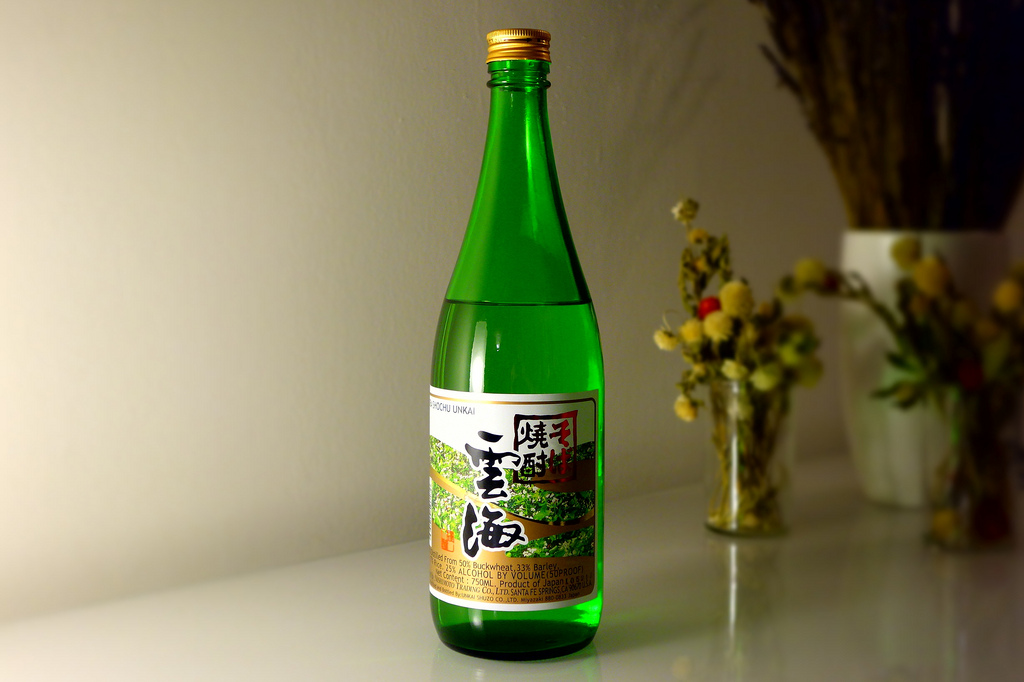
Soba, of course is buckwheat in English. Best known as a style of Japanese noodle, soba shochu was first developed in the 1970s in Miyazaki Prefecture by what is now known as the Unkai Distillery. Established in 1967, the Gokase Distillery released Unkai soba shochu in 1973. By 1978 they had changed their name to Unkai and they’ve never looked back. Unkai is now the 3rd largest products of shochu in Japan.

Soba shochu was a late starters, but is now the 5th most common ingredient, representing about 2% of all shochu consumed in Japan. Today Unkai is the most popular brand by a country mile, available in convenience stores, supermarkets, and liquor shops nationwide.

soba shochu
Unkai Soba Shochu

Unkai, like many “most popular” brands in a style, is a vacuum distilled soba shochu with bright aromas and a soft sweetness. It goes great on the rocks or with sparkling water, but due to the vacuum distillation it really doesn’t stand so far apart from a vacuum distilled rice or barley shochu.

What is Buckwheat Anyway?

Buckwheat is technically the seed of a fruit related to the rhubarb plant. This means that buckwheat is not a grain, which is the seed of a grass. Wheat, corn, barley, and rice are all grains. Buckwheat is sometimes referred to as a pesudograin, because its fruit lacks the sweet flesh we associate with fruits. Instead, the buckwheat seed is very grain-like with high starch content.

The Japanese government (and other governments around the world) do not seem to understand this nuance since buckwheat/soba is not a separate category for shochu – it falls into the grain bucket. Likewise, there are buckwheat whiskies sold elsewhere in the world and one of the defining characteristics of any recognized style of whisky globally is that its made from grains.

Buckwheat is a hearty grain, growing in nutrient poor soil and at higher elevations meaning that for much of our agrarian past, buckwheat was a very important staple crop in many parts of the world. The advent of commercial fertilizer has led to more fragile grains, which produce high yields per acre, to take over much of buckwheat’s former arable. The most well known buckwheat today comes from the steppes of Mongolia and within Japan, landlocked mountainous Nagano Prefecture it he leading producer.

Other Soba Shochu Brands to Try

While Unkai is the best selling, soba shochu gets very interesting when you start using an atmospheric still, which is the case with the Towari brand. Unfortunately, since Towari is owned by Takara, Inc., we may never know who actually makes it. Takara, a massive conglomerate, has contract distilling done for their honkaku shochu brands all over Japan with very strict non-disclosure agreements with their distilling partners.

Towari 100% Soba Shochu

Towari goes beyond being atmospheric distilled to being made with 100% soba. That’s right, the koji is grown on soba. Given the hard hulls, we imagine the soba is crushed or granulated before koji propagation. The resulting spirit is deep, rich, and roasty. A really lovely shochu to enjoy oyuwari.

Nagano, as the leading soba producing region in Japan, does have their own native soba shochu production, though there are fewer distilleries at work there than there are in Miyazaki where the style was created. One notable brand that caught Christopher’s attention (it’s easier to find Nagano soba shochu in Tokyo than in Kyushu) is the Toge brand.

Toge Soba Shochu

Finally, a brand both Stephen and Christopher are a fan of is Soba Kuro from Himeizumi Distillery, hanging off a cliff in northern Miyazaki. This atmospheric distilled soba shochu is rich and decadent and plays well with just about any service style.

Soba Kuro

More to Explore

As always, there is much more to explore in the world of soba shochu. If you have any brands you particularly like that we didn’t talk about, please hit us up on social media.

Kanpai!

Koji Cocktails on the Rise (ep. 60)

June 20, 2023 · Leave a Comment

INTRO

In the 60th episode of the Japan Distilled podcast, your hosts take a long, hard look at koji cocktails. That is, cocktails made with koji based spirits.

CREDITS

Theme Song: Begin Anywhere by Tomoko Miyata (http://tomokomiyata.net/)

Mixing and Editing: Rich Pav (https://www.uncannyjapan.com/)

HOSTS

CHRISTOPHER PELLEGRINI Vermont born and bred, long-time Tokyo resident and author of The Shochu Handbook, Christopher learned about delicious fermentations as a beer brewer at Otter Creek (Middlebury, VT). He now spends most of his waking hours convincing strangers that shochu and awamori are unlike anything they’ve ever tried before. 

STEPHEN LYMAN discovered Japan’s indigenous spirits at an izakaya in New York City. He was so enthralled that he now lives in Japan and works in a tiny craft shochu distillery every autumn. His first book, The Complete Guide to Japanese Drinks, was nominated for a 2020 James Beard Award.

Stephen and Christopher have gradually been won over to the world of cocktails.

If you have any comments or questions about this episode, please reach out to Stephen or Christopher via Twitter. We would love to hear from you. 

SHOW NOTES

Koji … Cocktails?

Koji spirits, collectively honkaku shochu, ryukyu awamori, koji whiskies, and gins made with a koji spirit base (usually redistilled shochu or awamori) are beginning to make their presence felt in American cocktail bars.

The Japanese spirits industry has certainly been pushing shochu and awamori as low proof alternative spirits bases for well over a deacde and the ascendance of the low proof cocktail may have finally created the momentum necessary for this shift.

Since there was no native cocktail tradition in Japan as we discussed in Episode 58 on classic Japanese cocktails, these spirits do not have classic cocktail recipes to rely on. Therefore, they either need to be considered as substitutes for western cocktails, or new cocktails need to be developed.

The Leading Edge

Jesse Falowitz and Taeko Ichioka of Mizu Shochu can really be said to be the originators of the koji cocktail. Their Mizu Shochu line of spirits has been in cocktail bars in New York City and beyond for a full decade at this point. In fact, the flirtybird has been on the menu at Angel’s Share for a full 9 years.

koji cocktail
The Mizu Shochu Flirtybird at Angel’s Share.

Following in their footsteps has been Nankai Shochu out of Los Angeles whose social media is all cocktails all the time and newcomer Mujen, which has all the glitz and glamor you would expect from a brand developed in the shadows of Hollywood Hills.

Nankai’s Shiitake cocktail riff.

Applications

The easiest application for koji spirits is as a replacement for another spirit in a classic cocktail. But they are classics for a reason so the koji spirit needs to either change the profile or enhance the drink in some way.

Using examples from the Honkaku Spirits portfolio, because that’s the portfolio we are most familiar with, Colorful Sweet Potato Shochu can serve as an excellent gin replacement in a negroni or an alaska. In the case of the negroni, Colorful creates an aromatic profile quite different from a classic gin negroni. In the case of the alaska, sweet potato shochu makes this particular koji cocktail a completely different experience than a gin-based alaska.

Another application, of course, is to create original koji cocktails as Angel’s Share did with the flirtybird Mizu Shochu Cocktail. This gives bartenders (professional or at home) the chance to be creative with other Japanese ingredients. Shiso leaf, pickled plum, wasabi, yuzu kosho, miso … the possibilities are exciting. As we discussed in Episode 58B, Yokka Koji Awamori ended up the best spirit options for the top 2 finalists of our first ever Koji Spirits Cocktail Competition.

And finally, there is the potential for a split base cocktail as was done at Death & Co. in NYC with their Adreneline Rush cocktail, which split Takamine Koji Whiskey with Overproof Jamaican Rum and Rye Whiskey to create a boozy flavor bomb.

More to Explore

Perhaps the most fun with koji cocktails is making them for yourself. Experiment, learn, try different brands to see how they change the resulting koji cocktail.

KANPAI!

The Charming Mitosaya Botanical Distillery (Ep. 59)

June 3, 2023 · 1 Comment

INTRO

In Episode 59 of The Japan Distilled Podcast, your co-hosts profile Mitosaya Botanical Distillery in Chiba Prefecture, makers of some of the most interesting eau de vie we’ve ever tried. 

CREDITS

Theme Song: Begin Anywhere by Tomoko Miyata (http://tomokomiyata.net/)

Mixing and Editing: Rich Pav (https://www.uncannyrobotpodcast.com/)

HOSTS

CHRISTOPHER PELLEGRINI Vermont born and bred, long-time Tokyo resident and author of The Shochu Handbook, Christopher learned about delicious fermentations as a beer brewer at Otter Creek (Middlebury, VT). He now spends most of his waking hours convincing strangers that shochu and awamori are unlike anything they’ve ever tried before. 

STEPHEN LYMAN discovered Japan’s indigenous spirits at an izakaya in New York City. He was so enthralled that he now lives in Japan and works in a tiny craft shochu distillery every autumn. His first book, The Complete Guide to Japanese Drinks, was nominated for a 2020 James Beard Award.

Stephen and Christopher have been to more distilleries than we can remember.

If you have any comments or questions about this episode, please reach out to Stephen or Christopher via Twitter. We would love to hear from you. 

SHOW NOTES

Mitosaya Botanical Distillery

Chiba is probably best known as the home of Narita Airport and/or Tokyo Disney, but despite its proximity to the capital, much of it is quite rural. The Mitosaya Botanical Distillery is situated in Otaki Village in the Isumi District in Central Chiba. During the bubble era, the Chiba Prefectural Government had established a public botanical gardens. The Chiba Botanical Gardens were unique compared to those in other parts of Japan in that they were dedicated to medicinal plants more so than pretty flower beds. Nevertheless, when the bubble popped so did the prefecture’s tax revenue and their appetite for operating a botanical garden. 

The gardens were shuttered and fell into disrepair until Hiroshi Eguchi went looking for a site for his dream of opening a botanical distillery. A Tokyo independent book seller, he first discovered European fruit brandy, which sent him to Germany to study how to make eau de vie under one of the premier spirits makers in the world. 

His search for the perfect location for his distillery led him to the Chiba Botanical Gardens where his Mitosaya Botanical Distillery is now situated. He and his family live on the property and he operates the distillery with one other full-time distillery worker and some part time support. 

Unlike many other distilleries, he’s turned his property in a community center of sorts with Farming Fridays and other opportunities for his neighbors and fans to come and help out. 

The gardens are not big enough to support the agricultural produce needed to make even his tiny batches of eau de vie, but they provide plenty of material for him to find new ingredients to make things from. He will first test out his ideas in a table top experimental still and then once he’s found a recipe he’s happy with, he’ll reach out to local farmers to source the ingredients he needs to make a full batch.

Mitosaya Botanical Distillery

Each batch represents a new brand, which is dated and numbered and named with a clever label. His products range from fruit distillates to macerated liqueurs to oddball ingredients like peanuts or chili peppers. Every bottling is distinct and all of them range from fascinating to delicious. 

Needless to say, Stephen and Christopher fell in love with the man and the place. 

KANPAI!

  • « Go to Previous Page
  • Page 1
  • Interim pages omitted …
  • Page 5
  • Page 6
  • Page 7
  • Page 8
  • Page 9
  • Interim pages omitted …
  • Page 19
  • Go to Next Page »

Primary Sidebar

Never miss a new episode. Subscribe now

Japan Distilled

Copyright © 2026 · Log in