• Skip to primary navigation
  • Skip to main content
  • Skip to primary sidebar
Japan Distilled logo in black.

Japan Distilled

Home of the Japan Distilled Podcast

  • Home
  • Podcast Episodes
  • About Us
  • Contact Us
  • Show Search
Hide Search

Podcast

The Wild World of Kokuto Shochu (Ep. 15)

June 21, 2021 · 2 Comments

EPISODE INTRO

In the 15th episode of the Japan Distilled podcast, your hosts Christopher Pellegrini and Stephen Lyman take a deep dive into kokuto shochu. This continues a multi-part series breaking down the various styles of honkaku shochu, which are classified by ingredient type in the main fermentation.

CREDITS

Theme Song: Begin Anywhere by Tomoko Miyata (http://tomokomiyata.net/)

Mixing and Editing: Rich Pav (https://www.uncannyjapan.com/)

HOSTS

CHRISTOPHER PELLEGRINI Vermont born and bred, long-time Tokyo resident and author of The Shochu Handbook, Christopher learned about delicious fermentations as a beer brewer at Otter Creek (Middlebury, VT). He now spends most of his waking hours convincing strangers that shochu and awamori are unlike anything they’ve ever tried before. 

STEPHEN LYMAN discovered Japan’s indigenous spirits at an izakaya in New York City. He was so enthralled that he now lives in Japan and works in a tiny craft shochu distillery every autumn. His first book, The Complete Guide to Japanese Drinks, was nominated for a 2020 James Beard Award.

Stephen and Christopher both prefer their sugar distilled.

If you have any comments or questions about this episode of Japan Distilled, please reach out to Stephen or Christopher via Twitter. We would love to hear from you. 

LINKS

Christopher’s excellent kokuto overview on kanpai.us.

Life Behind Bars podcast Episode 29 on the origins of rum.

Glocal Bar Vibes in Kumamoto (mentioned in this episode. The owner, Nori Yamashita, told Stephen the Lento with Hoppy story)

SHOW NOTES

Kokuto Sugar Origins

Sugar was believed to have first been cultivated in Melanesia (modern-day New Guinea in Indonesia) as early as 6,000 years ago while the manufacture of sugar that we might recognize as such today began more than 2,000 years ago on the southern coast of modern India. Not long after that, the first sugar distillates (rums) are believed to have been made in India with written mention around 700AD.

Early on sugar cane and the resulting sugar was a closely protected commodity, but over the centuries the cane and the processing technology expanded around the world. By the early 1600s, it had arrived in the Ryukyu Kingdom (modern-day Okinawa) via trade with China. When the Satsuma Domain subjugated Okinawa in 1609, they also, perhaps unknowingly, had acquired sugar-making technology for Japan as well.

cut sugar cane
Amami Island Cane awaiting processing.

As you may recall from our Okinawan Awamori episode, the Satsuma Daimyo allowed the Okinawan king to retain power. Still, he kept the Amami islands for Satsuma, where the domain subsequently set up its own sugar plantations. From the early 1600s to the late 1800s, the Amami Islands were essentially slave plantations for Satsuma, which became one of Japan’s most wealthy and powerful domains despite the relative remoteness from the shogun in Edo (modern Tokyo).

Kokuto Sugar

Production of sugar in Okinawa and subsequently in Amami developed into the kokuto style sugar we know and love today. Mineral-rich, grassy, and with only very light processing (very little molasses is removed). To read more about how kokuto sugar is made, please read Christopher’s excellent overview on Kanpai.US including production videos.

Kokuto sugar being processed.

Kokuto sugar, which is often mistakenly translated as black or brown sugar in English, is much darker and richer and, yes, healthier, than the brown sugar you find in western kitchens. The health benefits may best be represented by the enormous number of centenarians who live in Okinawa where kokuto is a dietary staple. In fact, Shigechiyo Izumi, who was claimed to have lived to over 120 years of age (now disputed), drank a glass of kokuto shochu every day for the last 50 years of his life.

Kokuto sugar awaiting processing at a shochu distillery in Amami.

Kokuto Shochu

Kokuto shochu can only be made in the Amami Islands, otherwise it must be labeled and taxed as distilled spirits, which has a higher tax rate than shochu.

Amami Islands in relation to mainland Japan and Okinawa.

In order to qualify as Amami Kokuto Shochu it must also be made with a rice koji starter fermentation. No other grain substrate is allowed for koji production.

Kokuto being dissolved in warm water.

After the koji rice starter fermentation, kokuto sugar blocks are melted down and added to the primary fermentation. The fermentation times are generally shorter than for other shochu traditions since the yeast can work directly on the kokuto rather than waiting for the koji to saccharify the starches.

Mentioned Kokuto Shochu Brands

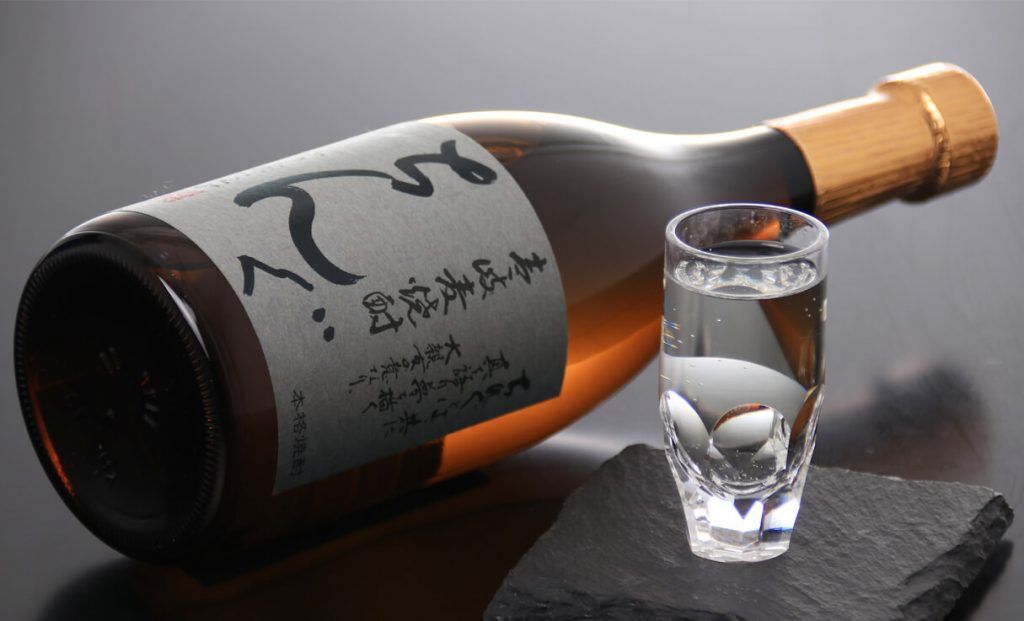
LENTO

Lento is the best selling kokuto shochu in Japan. The distinctive light blue bottle makes it stand out anywhere it’s available. Vacuum distilled, it’s super light and easy drinking.
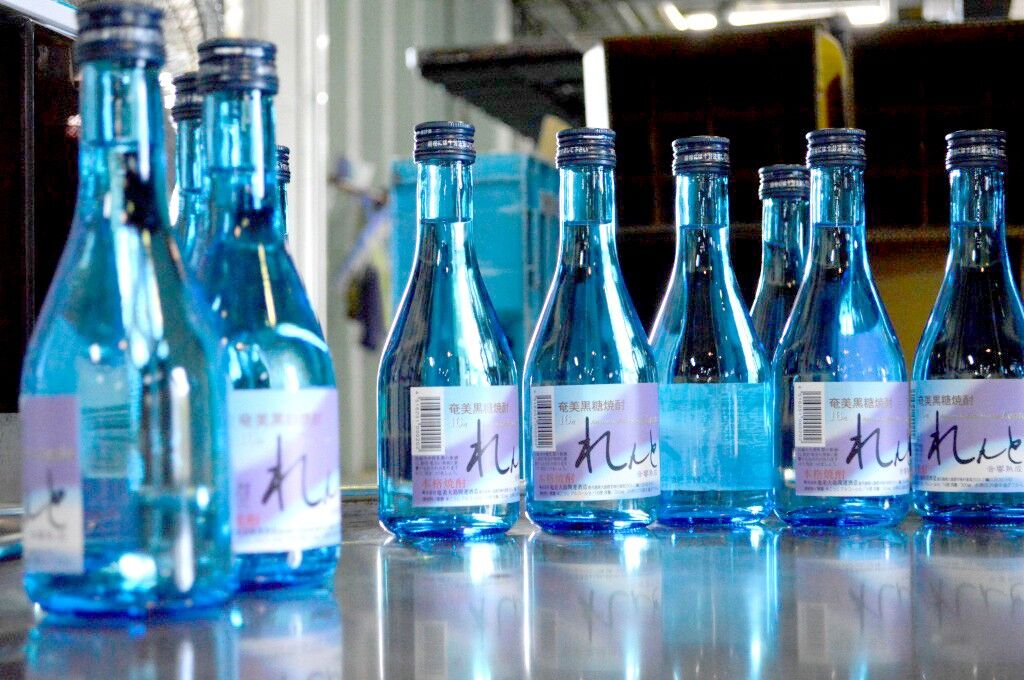
Lento Kokuto Shochu

The toji of the distillery recommends drinking it with Hoppy, a very low alcohol beer substitute. Beware, if you try ordering Hoppy with kokuto shochu in Japan it may be met with confusion by wait staff. Multiply distilled korui shochu is typically used for Hoppy. Stephen loves drinking a more full-bodied kokuto shochu with Hoppy Black (black labeled bottle not shown), which is made with roasted malts.

Hoppy is typically served with korui shochu in a frosty beer mug.

JOUGO

The distinctive toucan on the label makes Jougo stand out. Bright and fruity, Jougo expresses lychee very strongly on the nose. Great with soda.

Jougo Kokuto Shochu

ASAHI

Sharing the same name as the beer, Asahi shochu is a medium-bodied kokuto shochu from Kikai Island. At one point, it was available in the US, but appears to have left the market.

Asahi Kokuto Shochu

SATO NO AKEBONO GOLD

Made by Machida Distillery, which also produces the export-only Nankai (24% vacuum distilled kokuto shochu) and Nankai Gold (43% barrel-aged) brands for the US, the barrel-aged Sato no Akebono Gold won best in class for honkaku shochu at the 2020 Tokyo Whisky and Spirits Competition.

Sato no Akebono Gold
Nankai Gold (left), a barrel aged export expression from the same distillery.

BENI SANGO

Proving kokuto shochu is a legitimately lovely drink, Beni Sango won the best in class prize in the honkaku shochu category at the 2021 Tokyo Whisky and Spirits Competition. Beni Sango is an extremely well-regarded barrel-aged kokuto shochu.

Beni Sango

ICHIBAN BASHI

Given the vast array of shochu brands available in any given style, Stephen and Christopher rarely agree on a specific brand as their favorite of the style, but they both agree that Ichiban Bashi (#1 Bridge) from Yamada Distillery is their favorite kokuto shochu. It’s an all star. Plays well with hot water, straight, rocks, soda, or cold water. An all around beautiful drink. Deep, rich, sweet, balanced. Perfection.

ichibanbashi kokuto shochu
Ichiban Bashi

FAU HANATARE

Fau (44% ABV hanatare) is an oddball. This is a vintaged hanatare shochu produced by the makers of Lento.

Fau

Hanatare is essentially the first drops off the still so they are full of acetone and all kinds of volatiles. Best enjoyed as cold as possible. Stephen was sipping on this after freezing the bottle, using a single large block of ice, and in a frozen glass. The liquid becomes viscous and more palatable at this extremely cold temperature.

If we missed anything, please let us know, but this should keep you busy for a while.

Kanpai!

The Smelly, Wonderful World of Sweet Potato Shochu (Ep. 14)

June 7, 2021 · Leave a Comment

EPISODE INTRO

In the 14th episode of the Japan Distilled podcast, your hosts Christopher Pellegrini and Stephen Lyman take a deep dive into sweet potato shochu. This continues a multi-part series breaking down the various subcategories of honkaku shochu, which are classified by ingredient type in the main fermentation.

CREDITS

Theme Song: Begin Anywhere by Tomoko Miyata (http://tomokomiyata.net/)

Mixing and Editing: Rich Pav (https://www.uncannyjapan.com/)

HOSTS

CHRISTOPHER PELLEGRINI Vermont born and bred, long-time Tokyo resident and author of The Shochu Handbook, Christopher learned about delicious fermentations as a beer brewer at Otter Creek (Middlebury, VT). He now spends most of his waking hours convincing strangers that shochu and awamori are unlike anything they’ve ever tried before. 

STEPHEN LYMAN discovered Japan’s indigenous spirits at an izakaya in New York City. He was so enthralled that he now lives in Japan and works in a tiny craft shochu distillery every autumn. His first book, The Complete Guide to Japanese Drinks, was nominated for a 2020 James Beard Award.

Stephen and Christopher are both enormous sweet potato shochu fans and probably drink more of it than all other styles combined.

If you have any comments or questions about this episode of Japan Distilled, please reach out to Stephen or Christopher via Twitter. We would love to hear from you. 

LINKS

Maya Aley’s excellent summary of sweet potatoes in Japan.

SHOW NOTES

Sweet Potato Shochu Origins

Sweet potatoes are not native to Japan. They aren’t even native to Asia. In fact, they were brought to Asia by Portuguese traders who sold them to the Chinese, who sold them to the Ryukyu Kingdom (Okinawa), who sold them to Riemon Maeda, a Japanese fisherman, who brought the spuds back to his home in the Satsuma Domain in 1703.

It is no surprise that the name of the fisherman who brought sweet potatoes to Japan is remembered more than 300 years later when virtually all other Japanese commoners of the time are completely lost to history. In 1732, a massive grain crop failure resulted in mass starvation throughout Kyushu. But not in Satsuma. There, the lives of thousands of citizens were saved thanks to the abundant sweet potatoes that grew very well in the rocky, volcanic ash-laden soil. Riemon Maeda was given credit.

Japanese Sweet Potatoes

In most American supermarkets, you might find 1 or 2 varieties of sweet potatoes for sale. At Whole Foods, there might even be 3 or 4. In Japan, there are over 500 varieties of sweet potato cultivated, and more than 50 of those are used for shochu production in southern Kyushu. Rice doesn’t grow very well south of the Hitoyoshi Basin, which we described in the rice shochu episode. Therefore, plenty of farmland in Southern Kyushu (or Minami Kyushu as the region is known in Japanese) is devoted to sweet potatoes.

sweet potato field
A sweet potato field in Southern Kyushu.

Harvest occurs in the late summer to early winter, depending on the variety. Distilleries usually begin production in August or early September (smaller distilleries have a hard time sourcing early harvest potatoes, so they tend to start later) and are usually winding down in December or January unless they are aging the potatoes before distillation, in which case production can continue through early spring. A few of the largest distilleries have developed methods for freezing steamed sweet potatoes, which allows them to distill all year long.

The most common sweet potato used in shochu production is kogane sengan. These large, white-fleshed potatoes have been cultivated specifically for shochu. They are not usually consumed but are favored for shochu production due to their high crop yield per acre, high starch content (more alcohol potential), and the aromas and flavors they impart to the spirit.

kogane sengan harvest
A farmer in Kagoshima checking his kogane sengan field conditions.

Purple, red, and orange sweet potatoes, which are much closer to the sweet potatoes Americans can expect to find in their grocery stores, are used to make more premium sweet potato shochu since these are considered food items so prices are higher due to market competition. These are often referred to as satsuma imo (imo being the Japanese word for potato) throughout Japan. For many Japanese, the smell of a roasted satsuma imo evokes childhood memories of the pushcart salesman walking through their neighborhood sing-songing “yakiimo” over and over again (yaki being the Japanese word for grilled as is used in yakitori [grilled chicken] or yakiniku [grilled meat]).

A freshly steamed satsuma imo.

Murasaki imo, or purple potatoes are often called Okinawa Imo as they are most often associated with Okinawan cuisine, but they are used in shochu production as well.

Murasaki, or Okinawa, imo has bright purple flesh.

Sweet Potato Shochu

As with barley shochu, sweet potato shochu can begin with a rice koji or barley koji fermentation, but they are also occasionally made with sweet potato koji. By production volume, a vast majority of sweet potato shochu begins life as a rice koji fermentation. We would hazard to guess that this represents more than 99% of the market, though both Japanese short-grain rice or Southeast Asian style long-grain is used depending on the flavor goals of the distillery (and their price sensitivity since short-grain rice can sell for many times more than long-grain rice in Japan).

Sweet potatoes are added to the main fermentation. These potatoes are washed and trimmed before being either steamed or roasted before being added to the main fermentation. The skins are rarely removed as that is where much of the flavor lives. Steamed sweet potato-produced shochu represent a vast majority of the market.

With approximately 80 shochu distilleries in Kagoshima Prefecture (plus 28 in the Amami Islands making kokuto sugar shochu, but we will save that for the next episode) and another 40 or so distilleries in Miyazaki Prefecture, a huge majority of sweet potato shochu is made in Southern Kyushu.

Map of Kyushu (*note: many important peripheral islands are missing).

Shochu made in Kagoshima from locally grown sweet potatoes qualifies for the WTO Geographic Indication of Satsuma Shochu, just as Kumamoto made rice shochu qualifies as Kuma Shochu and Iki Island made barley shochu can qualify as Iki Shochu.

Satsuma Shochu GI Mark
The Satsuma Shochu WTO Geographic Indication Logo.

Mentioned Sweet Potato Shochu Brands

IN ORDER OF APPEARANCE ON THE SHOW

KURO KIRISHIMA, AKA KIRISHIMA

The black labeled Kuro Kirishima is by far the best-selling shochu in Japan. It’s made in Miyazaki Prefecture with black koji but is resolutely inoffensive. The red labeled Aka Kirishima is considered more premium and is often given as a gift. Made with red sweet potatoes.

The Kirishima Lineup (right, not mentioned on the episode is the white koji version)

SATSUMA SHIRANAMI

The OG in the minds of many Japanese people, Satsuma Shiranami was the first shochu brand to go national in the country. It has since been eclipsed by Kirishima. As you might have guessed by the name, this qualifies as Satsuma Shochu. The iconic wave label is instantly recognizable on bars throughout Japan.

satsuma shiranami
Satsuma Shiranami

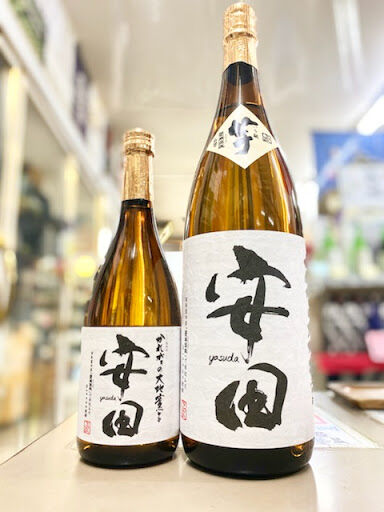
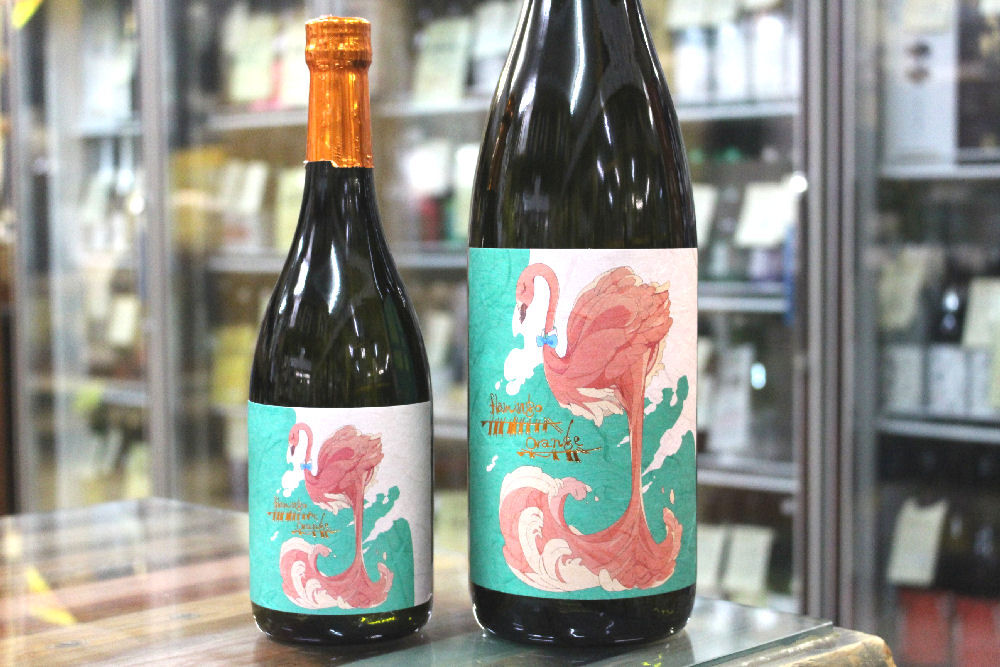
YASUDA, FLAMINGO ORANGE

These new fruity styles have been gaining in popularity. Komasa has also been making these styles using different kinds of yeast.

  • Yasuda
  • Flamingo Orange

IKKOMON, BENIIKKO

The Ikkomon series is made with sweet potato koji. Tasting through these will give drinkers the sense of what the potato brings to the spirit without rice included. The blue and red labels are widely available in overseas markets. Sadly, the purple label is not.

The Ikkomon Line

THE HOZAN SERIES

An alternative tasting exploration is to try 3 different shochu made with 3 different koji types: black, white, and yellow. The Hozan Series helpfully color codes the labels. The yellow koji Tomi no Hozan is the best-selling yellow koji sweet potato shochu in Japan.

The Hozan Series

TENSHI NO YUWAKU

This barrel-aged full proof (40%) shochu is a beautiful spirit (in beautiful packaging) from Nishi Distillery, makers of the Hozan line. At 40% ABV this is higher than most sweet potato shochu, which usually starts life at 36-38% alcohol.

Tenshi No Yuwaku
Tenshi no Yuwaku

MAHOKO

Not aged in oak, but 16 years old at bottling, Mahoko is a handmade sweet potato shochu from Furusawa Distillery in Miyazaki. At 35% ABV it is only slightly diluted as the angel’s share has reduced the stored genshu to under 36% ABV. Newly available only in the U.S.

mahoko shochu
Mahoko 16 year old sweet potato shochu

TOJI JUNPEI

Another handmade shochu from Miyazaki is Toji Junpei, made by a toji (master brewer-distiller) fittingly named Junpei. Available in the US market despite this being a tiny distillery.

toji junpei shochu
Toji Junpei Shochu

YAMATO ZAKURA

Yamato Zakura is the smallest shochu distillery in Kagoshima and makes only white koji expressions. The main brand is the brand that Stephen helps make every fall.

Yamato Zakura Shochu

ROKU DAIME YURI

The shochu Stephen was sipping on during the episode. Very hard to find anywhere in Japan. Made on Koshiki Island, home to only 2 distilleries. Won best of the best in a blind tasting in Dancyu Magazine, beating out all of the more famous brands.

Roku Daime Yuri in 1.8L and 720ml bottles.

MANZEN, MANZENAN, MANAZURU

Christopher was sipping on Manazuru during the show. These shochu are all made by Manzen Distillery. The main brand, Manzen, uses black koji while Manzenan uses yellow and Manazuru uses white. Manazuru is made just one time per year, so it is extremely hard to find leading Christopher to hunt it on auction all the time.

Manazuru, Manzenan, Manzen, and Manzen 720ml.

Rumor has it Christopher’s booze closet floor looks a little bit like this.

If we missed anything, please let us know, but this should keep you busy for a while.

Kanpai!

A Deep Dive into Barley Shochu (Ep. 13)

May 24, 2021 · 4 Comments

EPISODE INTRO

In the 13th episode of the Japan Distilled podcast, your hosts Christopher Pellegrini and Stephen Lyman take a deeper dive into barley shochu. This continues a multi-part series breaking down the various subcategories of honkaku shochu, which are classified by ingredient type in the main fermentation.

CREDITS

Theme Song: Begin Anywhere by Tomoko Miyata (http://tomokomiyata.net/)

Mixing and Editing: Rich Pav (https://www.uncannyjapan.com/)

HOSTS

CHRISTOPHER PELLEGRINI Vermont born and bred, long-time Tokyo resident and author of The Shochu Handbook, Christopher learned about delicious fermentations as a beer brewer at Otter Creek (Middlebury, VT). He now spends most of his waking hours convincing strangers that shochu and awamori are unlike anything they’ve ever tried before. 

STEPHEN LYMAN discovered Japan’s indigenous spirits at an izakaya in New York City. He was so enthralled that he now lives in Japan and works in a tiny craft shochu distillery every autumn. His first book, The Complete Guide to Japanese Drinks, was nominated for a 2020 James Beard Award.

Stephen and Christopher were both introduced to the world of authentic Japanese honkaku shochu through barley shochu. Stephen remembers his first brand (iichiko), Christopher, alas, does not.

If you have any comments or questions about this episode of Japan Distilled, please reach out to Stephen or Christopher via Twitter. We would love to hear from you. 

SHOW NOTES

Barley Shochu Origins

While the earliest shochu was almost assuredly made of rice, barley shochu likely appeared quite soon afterward. Farmers and fishermen in Kyushu were growing rice, barley, millet, wheat, and other grains, but since rice was the taxable commodity during the Edo era, the farmers would have had an incentive to use other grains for their spirits.

Japanese Barley

Japanese barely is almost always 2-row or 6-row barley with 2-row barley being most common for shochu production. Most barley grown in Japan is used for beer, barley tea, and food production, but some of it does find its way into pot stills for shochu and whisky making. Barley is typically harvested in May and rice is planted int he same fields shortly afterward. As such, shochu made from fresh barley is produced in the summer months.

Japanese barley field
Japanese barley.

However, most barley consumed in Japan is imported. The most common import countries are Australia, Canada, and the US. Australian barley is often considered the most suitable for shochu production, though the reason remains a mystery.

Australian barley field
Australian barley is most often used in barley shochu production.

Unlike whisky and beer production, the barley used in shochu is polished before use. As with rice polishing for shochu production, the barley is usually polished to between 85-90% of the original weight. This pearled barley is most similar to what is used in European barley soups.

pearled barley
Polished barley being used in barley shochu production.

Barley Shochu

Barley shochu can begin with either a rice koji fermentation or a barley koji fermentation. By production volume, 100% barley shochu (made with barley koji) is most common. However, it is believed that the earliest barley shochu were made with a rice koji starter fermentation.

Iki Shochu

Barley shochu produced on tiny Iki Island (just 20km – 12 miles end to end) qualifies for the WTO recognized Iki Shochu designation. However, this shochu must be made using 1/3 rice koji in the starter fermentation with 2/3 barley added to the primary fermentation. There is no requirement to use Iki-grown barley, but an Iki water source must be used. Just 7 distilleries on Iki Island produce this style.

Map of Kyushu. Iki Island can be seen in the northwest corner, not too far from Fukuoka City.

However, most barley shochu is actually produced in northern Kyushu (Saga, Fukuokka, and Oita prefectures) with Oita Prefecture leading annual production volume due to being the home of two very large producers, Sanwa Shurui (who makes the best selling iichiko) and Nikkiado (who makes their eponymous brand).

These two distilleries in particular broke out in the 1970s and 1980s due to their innovative use of vacuum distillation (Nikkaido) and blending (Sanwa Shurui).

Recommended Barley Shochu Brands

IKI SHOCHU

CHINGU

The Chingu brand from Iki is made by hand and is available in both atmospheric (brown bottle) and vacuum (green bottle) expressions. The atmospheric Chingu drinks full bodied while the vacuum is light and expresses very well with soda.

Chingu handmade Iki Shochu

YAMANOMORI

Available in foreign markets, Yamanomori is a full-bodied atmospheric distilled Iki shochu. Only very lightly filtered for a long finish.

Yamanomori Iki Shochu

IKI SUPER GOLD

Iki Super Gold from Genkai Distillery is a very popular brand nationally in Japan. Barrel aged, but still compliant with the color restrictions now in place for shochu. Vacuum distilled and just 22% ABV, it is a very light, easy-drinking barley shochu.

Iki Super Gold Shochu

OITA BARLEY SHOCHU

NIKAIDO

Nikaido’s US export brand is Kitchomu, which comes in a ceramic jar rather than glass bottle. This brand is vacuum distilled (and very hard to find a picture of online – if anyone has one, please send it our way!). Nikaido made a name for themselves by innovating in the world of 100% barley shochu and vacuum distillation.

Nikaido Kitchomu

IICHIKO

The iichiko line comes in a variety of expressions from Sanwa Shurui. They took Nikaido’s vacuum distilled concept and perfected it through blending.All are 100% barley and represent a blend of different base distillates. Their most recent release, Saiten, is designed for bartenders.

iicihiko lineup
iichiko Saiten, a new 43% barley shochu

FUKUOKA BARLEY SHOCHU

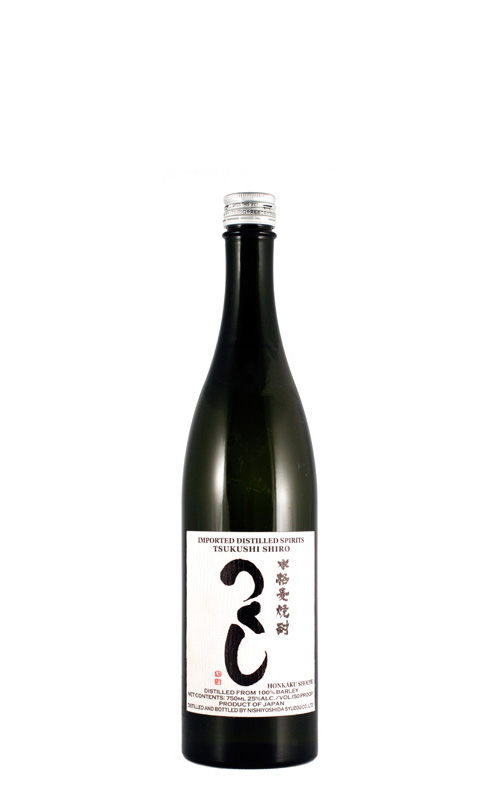
TSUKUSHI

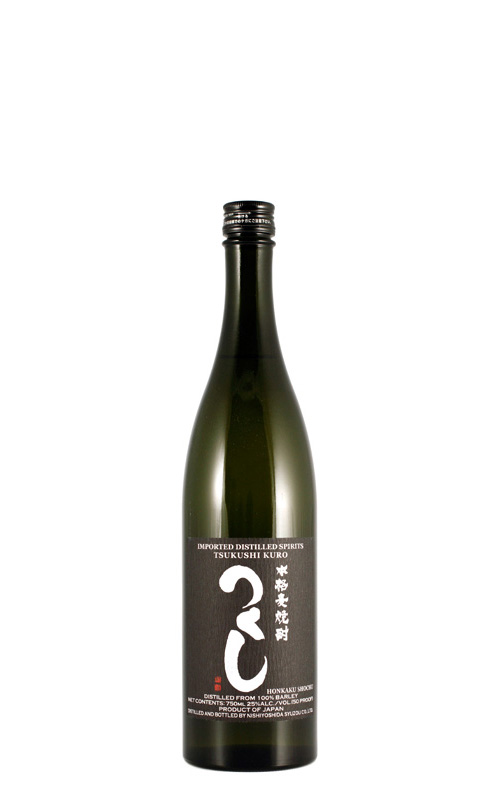
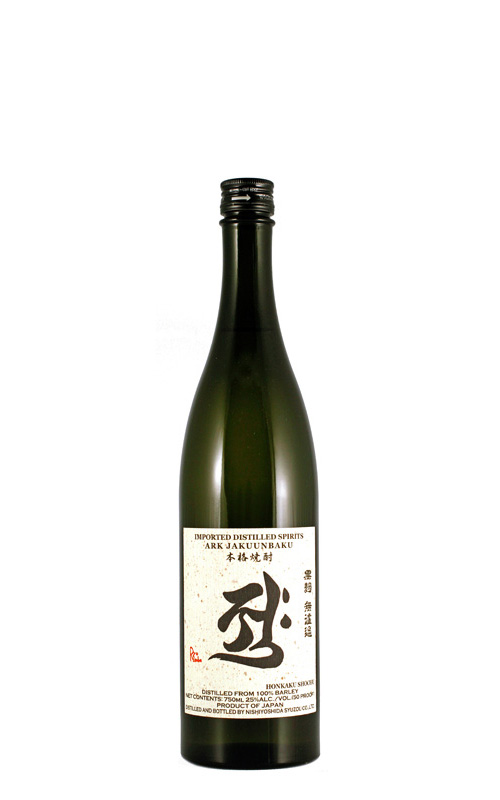
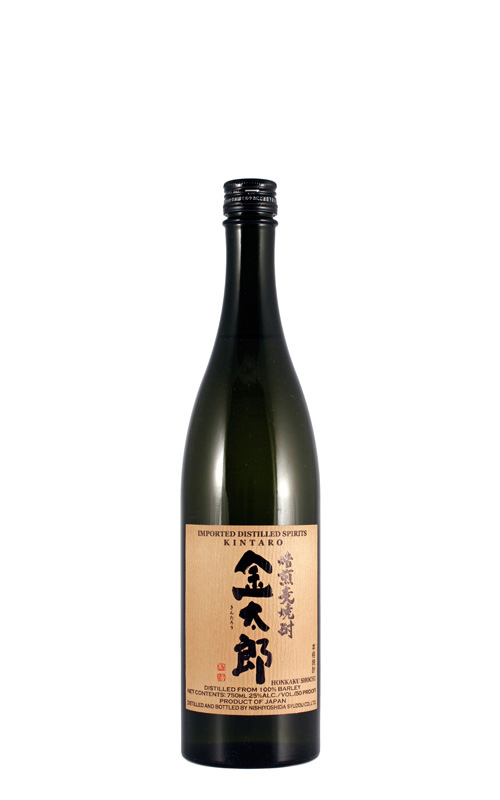
Tsukushi is a 100% barley shochu from Nishiyoshida Distillery in Fukuoka. The white label expression is lighter while the black label is more full-bodied.Their sister brands Ark Jakuunbaku and Kintaro are unfiltered and made from roasted barley respectively. Pretty much everything Nishiyoshida makes is worth trying.

The White and Black versions of Tsukushi
Ark Jakuunbaku (unfiltered) and Kintaro (roasted barley)

SAGA BARLEY SHOCHU

MIZU

Mizu shochu is an export brand from Munemasa Distillery in Saga Prefecture. Only 12 shochu distilleries operate in the prefecture and Munemasa is easily the msot prolific. Unlike most shochu, Mizu clocks in at 35% ABV so it will hold up as a cocktail base. As a result of the tireless efforts of the brand’s founder, Mizu is now one of the most popular shochu brands available in the US.

Mizu Saga Barley Shochu

MIYAZAKI BARLEY SHOCHU

HYAKUNEN NO KODOKU

If any brand challenges Kanehachi for the title of the most famous brand of barley shochu in Japan, Hyakunen no Kodoku may be the top competitor. A 40% ABV barrel aged barley shochu, it is rich with strong vanilla and oak flavors. Beautiful packaging as well. The name translates as “100 years of solitude” as the distillery owner was a fan of the magical realist novel of the same title.

Hyakunen No Kodoku

Our Favorites

Christopher and Stephen pretty strongly agree that their favorite barley shochu are both from small distilleries in Oita.

KANEHACHI

Kanehachi is likely the most famous barley shochu in Japan, at least among 25% expressions. Atmospheric distilled, rich, lush, and very hard to find.

Kanehachi Barley Shochu

TAIMEI

Taimei is a 100% handmade barley shochu from tiny Fujii Distillery in the mountains of Oita.

Taimei Barley Shochu

If we missed anything, please let us know, but this should keep you busy for a while.

Kanpai!

Rice Shochu: Japan’s First Native Spirit (Ep. 12)

May 10, 2021 · 6 Comments

EPISODE INTRO

In the 12th episode of the Japan Distilled podcast, your hosts Christopher Pellegrini and Stephen Lyman take a deeper dive into rice shochu. This begins a multi-part series breaking down the various subcategories of honkaku shochu, which are classified by ingredient type in the main fermentation.

CREDITS

Theme Song: Begin Anywhere by Tomoko Miyata (http://tomokomiyata.net/)

Mixing and Editing: Rich Pav (https://www.uncannyjapan.com/)

HOSTS

CHRISTOPHER PELLEGRINI Vermont born and bred, long-time Tokyo resident and author of The Shochu Handbook, Christopher learned about delicious fermentations as a beer brewer at Otter Creek (Middlebury, VT). He now spends most of his waking hours convincing strangers that shochu and awamori are unlike anything they’ve ever tried before. 

STEPHEN LYMAN discovered Japan’s indigenous spirits at an izakaya in New York City. He was so enthralled that he now lives in Japan and works in a tiny craft shochu distillery every autumn. His first book, The Complete Guide to Japanese Drinks, was nominated for a 2020 James Beard Award.

Stephen and Christopher would both be happy to live in Hitoyoshi, Kumamoto, home to rice shochu, if only it weren’t so far from anywhere you could live without a car.

If you have any comments or questions about this episode of Japan Distilled, please reach out to Stephen or Christopher via Twitter. We would love to hear from you. 

SHOW NOTES

Origins

It is safe to assume that the earliest shochu produced in Japan was made of rice since sake had been made in Japan for hundreds of years prior to the introduction of the pot still. However, since shochu production started with moonshine made by farmers and fishermen, it’s possible another grain was predominant in the early days. The most likely candidate would be millet, which today is animal feed, but was a staple in the peasant diet of Edo Era Japan.

Japanese Rice

Japanese rice cultivation started in Northern Kyushu around 1,000 BCE. Over the intervening 3,000 years, Japanese rice evolved into the modern short-grain rice favored in Japanese cuisine and beverage traditions. This rice tends to be lower in proteins and fats than long-grain varieties cultivated in other parts of Asia, which lends itself to the clean, sweet profile preferred in modern sake.

rice field
Japanese rice near harvest time in a field in Saga Prefecture.

Well over 100 rice varieties are used for sake and shochu production in Japan. These range from standard Japanese table rice to Yamada Nishiki, considered the king of premium sake rice. Yamada Nishiki is a tall rice variety, making it prone to damage during the frequent summer typhoons.

rice varieties
Several rice varieties on display at Tenzan Brewery and Distillery in Saga Prefecture. Far right is Yamada Nishiki.

Most shochu uses Japanese food quality rice polished to approximately 85-90% of the original grain size. Just enough to remove the hull, bran, and any unwanted impurities in the surface layer of the grain. That said, some rice shochu does use higher quality rice for premium brands and sometimes at higher polishing rates.

Rice Shochu

Rice shochu differs from other styles of shochu in that it is made with 100% rice. No other ingredients other than water, yeast, and koji mold are included. A single exception might be lactic acid when yellow koji is used to protect the fermentation from other invasive organisms.

Kuma Shochu

Rice shochu produced in the Kuma River Basin in Kumamoto using local spring water and Japanese rice is eligible for the Kuma Shochu WTO designation.

Kuma River
The Kuma River upstream from Hitoyoshi.

The water comes from the Kuma River, which has been selected as one of the most pristine rivers in Japan many times. The basin is situated in mountain plains just south of the Kyushu Mountain Range.

Kyushu Map
Map of Kyushu. The Kuma River basin is just sousth of the “Kyushu Mts” text on this map. Note the Kuma River running through the area.

Brands Recommended in Order of Appearance

KUMA SHOCHU

HAKUTAKE SHIRO

The Shiro Line from Takahashi Distillery. White label (center) is the best selling rice shochu in Japan.

Hakutake Shiro (center) is Japan’s best-selling rice shochu. Vacuum distilled, easy-drinking, fruity, and light. Kinjo (left) and Ginrei (right) are barrel-aged sake yeast expressions, respectively.

SENGETSU

Sengetsu
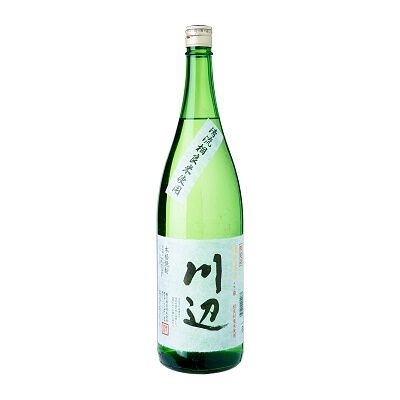
Kawabe
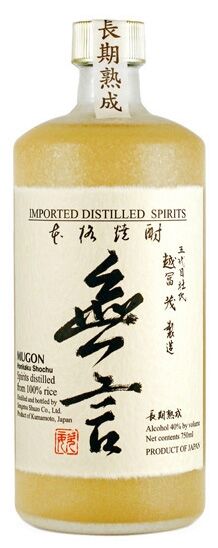
Mugon

These 3 expressions from Sengetsu Distillery are available in many export markets. Sengetsu (left) is the main brand. Kawabe (center) is made with a more sake-like process. Mugon (right) is barrel-aged and bottled at 40% alcohol.

TORIKAI

Torikai is the only product made by Torikai Distillery. With a 45-day ginjo style low-temperature fermentation, Torikai is essentially distilled junmai ginjo sake. Umami laden, but with wonderful ginjo yeast aromas.

TOYONAGA KURA

Toyonaga Kura vacuum distilled with old green bottle. Now brown for export.

Toyonaga Distillery makes a line of wonderful handmade shochu, the most popular of which is the white-labeled vacuum distilled expression. The black-labeled version of the same name is atmospheric distilled. They also make Jigaden, which we introduce below.

NON-KUMA RICE SHOCHU

AMAKUSA

Amakusa
Amakusa Rice Shochu

From Kumamoto, but not from the Kuma River Basin, Amakusa is made on Amakusa Island and this rice shochu saved the former sweet potato shochu distillery from going bankrupt when Hakutake Shiro took over the local market.

HAKKAISAN RICE SHOCHU

Hakkaisan Rice Shochu

Hakkaisan Brewery in frigid Niigata Prefecture makes premium sake, but also sells this popular rice shochu brand in Japan.

YAMASEMI

Yamasemi from Osuzuyama Distillery in Miyazaki

Yamasemi is from the famed Kuroki Honten/Osuzuyama family of distilleries in Miyazaki. A very light example of an atmospheric distilled rice shochu.

MOTOKO

Motoko
Motoko from Furuasawa Distillery in Miyazaki

Motoko is a long-aged rice shochu from Furusawa Distillery in Nichinan, Miyazaki. Bottled at 35% alcohol after being aged in a combination of ceramic pots and enamel tanks for more than 9 years.

MELLOWED KOZURU

Mellowed Kozuru is a barrel-aged rice shochu from Komasa Distillery in Kagoshima.

Mellowed Kozuru lays claim to being the first barrel-aged shochu and has been in continuous production since 1957. Komasa learned a thing or two about barrel aging through Mellowed Kozuru and is about to release their first Single Malt Whisky from the Kanosuke Distillery, which shares land (but not equipment or ingredients) with the shochu distillery that makes this brand.

Our Favorites

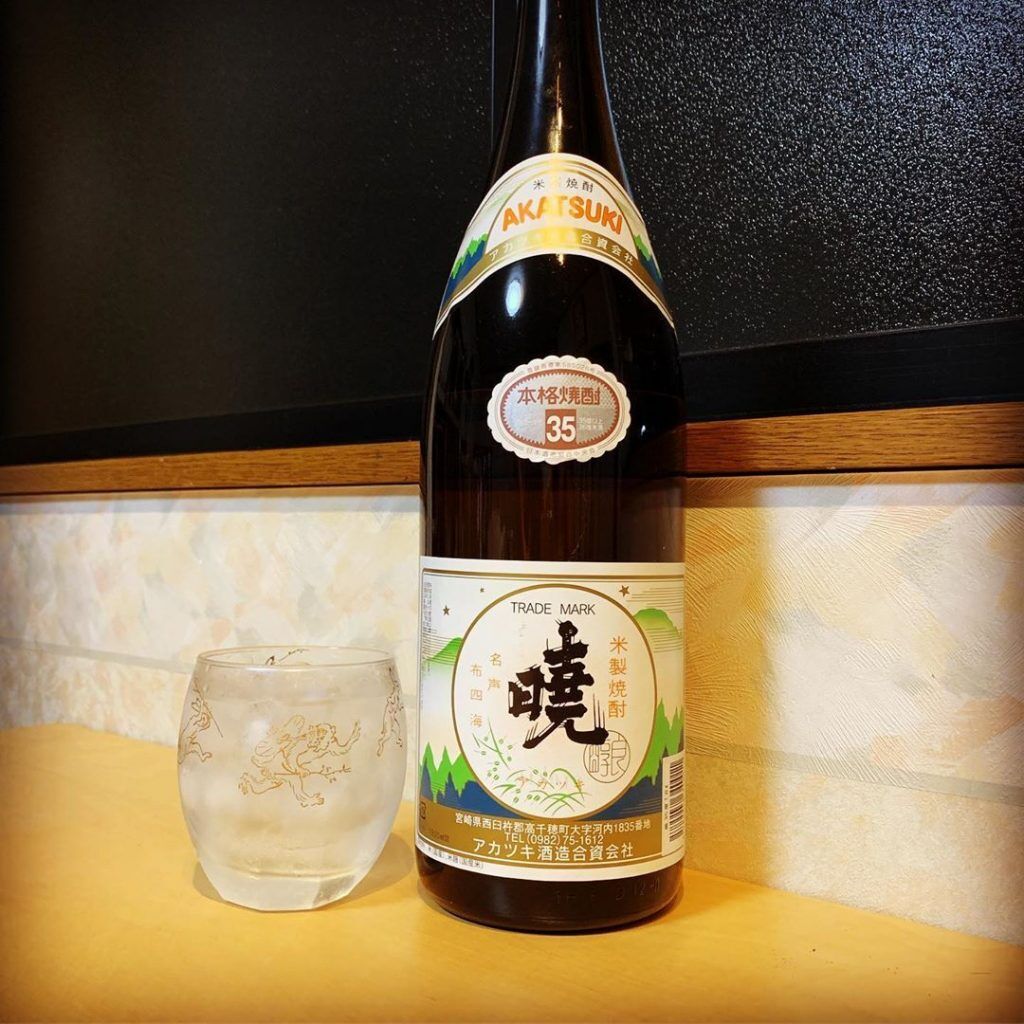
Christopher’s shout out on the show was Musha Gaeshi. What he was drinking during recording was Akatsuki (another favorite of his).

MUSHA GAESHI

Musha Gaeshi is made at the smallest distillery in Hitoyoshi. Atmospheric distilled and completely handmade. Absolutely lush. If you can find the black label (aged 10 years in ceramic), drink it.

Musha Gaeshi handmade rice shochu

AKATSUKI

Made in the mountains of northern Miyazaki, Akatsuki is the only brand from this tiny distillery.

This is a 35% expression of Akatsuki. A 25% brand is more common.

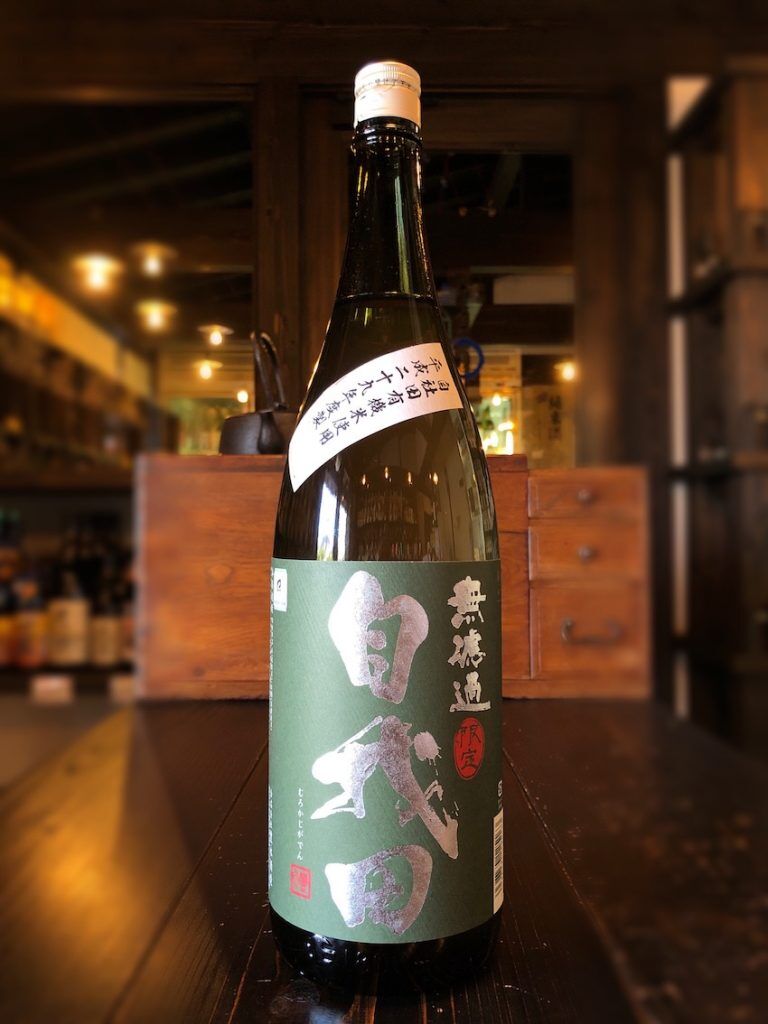
JIGADEN

Stephen’s favorite is Jigaden, a handmade rice shochu produced by Toyonaga Distillery from organic rice grown in their own rice paddy behind the distillery. Unfiltered, so it’s got flavor for days.


Jigaden organic rice shochu.

SHIRAITSUKI

During the recording, Stephen was sipping on Shiraitsuki, a 30-year-old rice shochu from Sengetsu, makers of Kawabe and Mugon mentioned above. Deep mineral, caramel, and grain flavors. Available at the distillery, but not many other places.

If we missed anything, please let us know, but this should keep you busy for a while.

Kanpai!

Shochu vs. Soju: a fierce rivalry? (Ep. 11)

April 26, 2021 · Leave a Comment

shochu vs. soju
Can you tell what is shochu and what is soju?

EPISODE INTRO

In the 11th episode of the Japan Distilled podcast, your hosts Christopher Pellegrini & Stephen Lyman tackle their most controversial topic yet: shochu vs. soju. One made in Japan (shochu) and one made in Korea (soju). A previous shochu vs. soju post on kanpai.us ended up garnering the most visits and more comments than usual, many defending soju. Well, we are here to set the record straight.

CREDITS

Theme Song: Begin Anywhere by Tomoko Miyata (http://tomokomiyata.net/)

Mixing and Editing: Rich Pav (https://www.uncannyjapan.com/)

HOSTS

CHRISTOPHER PELLEGRINI Vermont born and bred, long-time Tokyo resident and author of The Shochu Handbook, Christopher learned about delicious fermentations as a brewer at Otter Creek (Middlebury, VT). He now spends most of his waking hours convincing strangers that shochu and awamori are unlike anything they’ve ever tried before. 

STEPHEN LYMAN discovered Japan’s indigenous spirits at an izakaya in New York City. He was so enthralled that he now lives in Japan and works in a tiny craft shochu distillery every autumn. His first book, The Complete Guide to Japanese Drinks, was nominated for a 2020 James Beard Award.

We are both certified sake and shochu professionals. Christopher lived in South Korea and is intimately familiar with this similarly named drink. Stephen usually regrets trying it one more time.

If you have any comments or questions about this episode of Japan Distilled, please reach out to Stephen or Christopher via Twitter. We would love to hear from you. 

SHOW NOTES

Back when we started promoting shochu and awamori overseas in the late-aughts to early 20-teens, when we would ask, “Have you ever tried shochu?” 9 times out of 10, the answer was, “Yes, at a Korean restaurant.”

Soju goes great with spicy Korean food.

Shochu and soju sound very similar to western ears and even more confusingly, they actually mean the same thing in their respective languages: burned liquor.

This, of course, refers to the traditional use of fire in distillation, which is absent from most brewed beverage traditions, which were developed before distilled spirits became a thing.

The concern regarding naming was further confused by Korean American lobbying efforts in the US, which was successful in getting “soju” classified as a low proof beverage, allowing it to be sold on a “soft liquor” (beer, wine, sake) rather than “hard liquor” (spirits) license in several US states, most notably California.

All of these are Japanese shochu, yet every bottle has “soju” on the label.

Japanese shochu makers, seeing an opportunity (California is a huge market on its own), started slapping soju on shochu export labels. Enter: consumer confusion.

Shochu vs. Soju Basics

Shochu Rules

Region: can be made anywhere in Japan, but rice from Kumamoto, barley from Iki Island, sweet potato from Kagsohima, and kokuto sugar from Amami Island are protected.

Ingredients: rice, barley, sweet potato, buckwheat, kokuto sugar, and approximately 45 other grains, tubers, vegetables, and aromatics allowed. Non-approved ingredients prohibited for honkaku (authentic) designation.

Fermentation: koji starter fermentation required.

Distillation: pot distillation required.

Additives: water and time. No other additives permitted for authentic designation. Small amounts of sugar allowed, but must be disclosed for otsurui (single distilled) shochu.

soju
The ubiquitous green bottles.

Soju Rules

Region: can be made anywhere in Korea, but Andong soju can only be made in Andong City. This is marketed as a traditional soju, though there are no rules around production.

Ingredients: anything goes.

Fermentation: anything goes.

Distillation: anything goes.

Additives: common. Typically natural or chemical sweeteners, acids, other flavorings.

As you can see, these are very different products in their production philosophy.

Key Similarities

  1. Distilled
  2. Relatively low ABV among spirits so goes well with food
  3. Made in Asia
  4. Sound similar

Q: In the head to head battle of shochu vs. soju, who wins?

A: Depends on what you are eating.

Kanpai!

**Errata: Stephen and Christopher’s weekly “Shochu’sday” livestream has migrated from Instagram to the Japan Distilled accounts on Facebook and YouTube. Please check those accounts for upcoming broadcasts.

  • « Go to Previous Page
  • Page 1
  • Interim pages omitted …
  • Page 15
  • Page 16
  • Page 17
  • Page 18
  • Page 19
  • Go to Next Page »

Primary Sidebar

Never miss a new episode. Subscribe now

Japan Distilled

Copyright © 2026 · Log in